
中文
Autumn sunlight filtered across campus. Inside a Grade 9 Chinese classroom at Haidian Kaiwen Academy, a group of students leaned into a discussion: “When traditional crafts adapt to modern markets through mass production, does that lead to a decline in craftsmanship—and the loss of artisan spirit?”
Over several weeks, this group explored the theme of liuli (colored glaze) and glassware craftsmanship, visiting the National Museum to view the Zibo Liuli Art Exhibition, experiencing both modern and traditional firing techniques, and interviewing Mr. Liu Yu, an inheritor of Beijing glassware, an officially recognized intangible cultural heritage craft.
After sustained investigation, they began wrestling with a deeper question: How can traditional craftsmanship be preserved while responding to contemporary market demands?
This was just one moment during Haidian Kaiwen Academy’s Chinese Traditional Culture Month—a month-long inquiry that invited middle and high school students to explore heritage through research, discussion, and fieldwork.
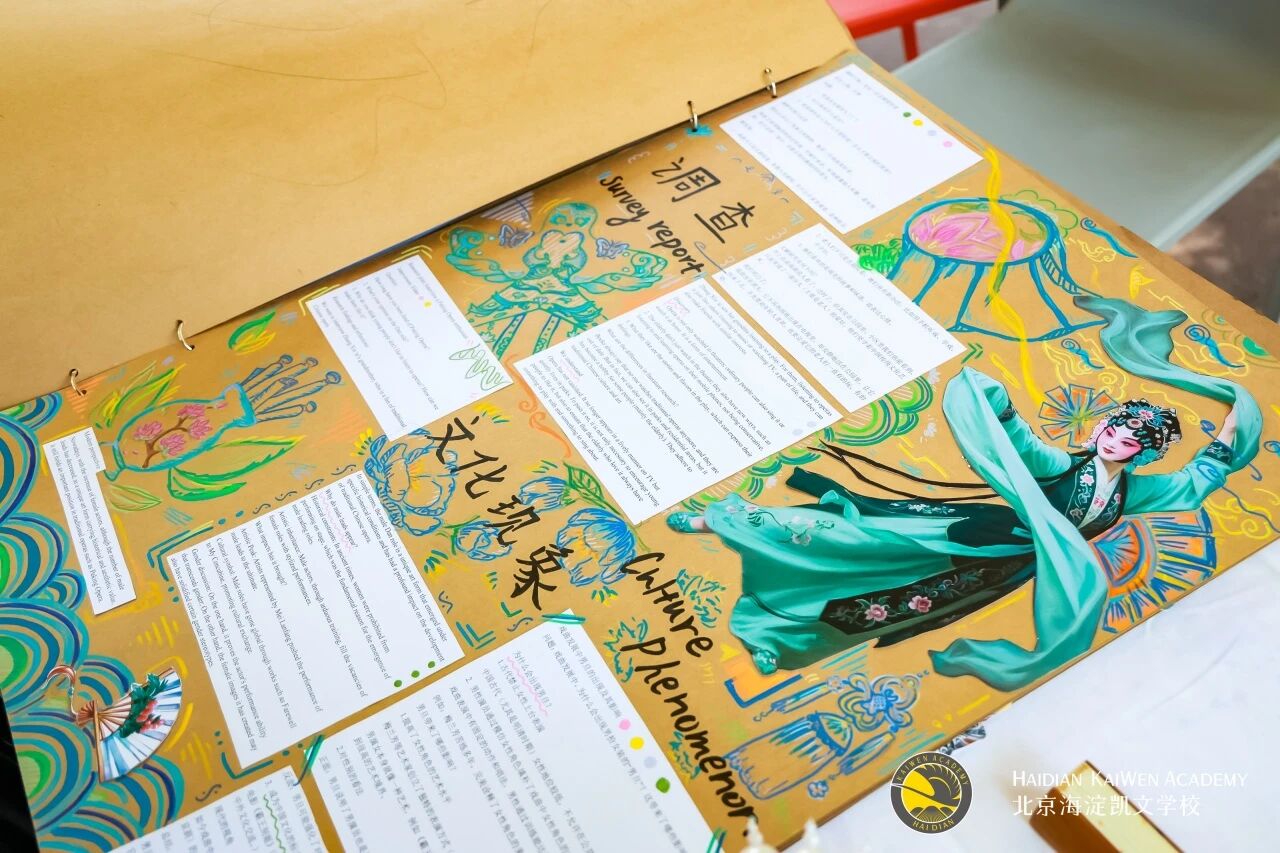
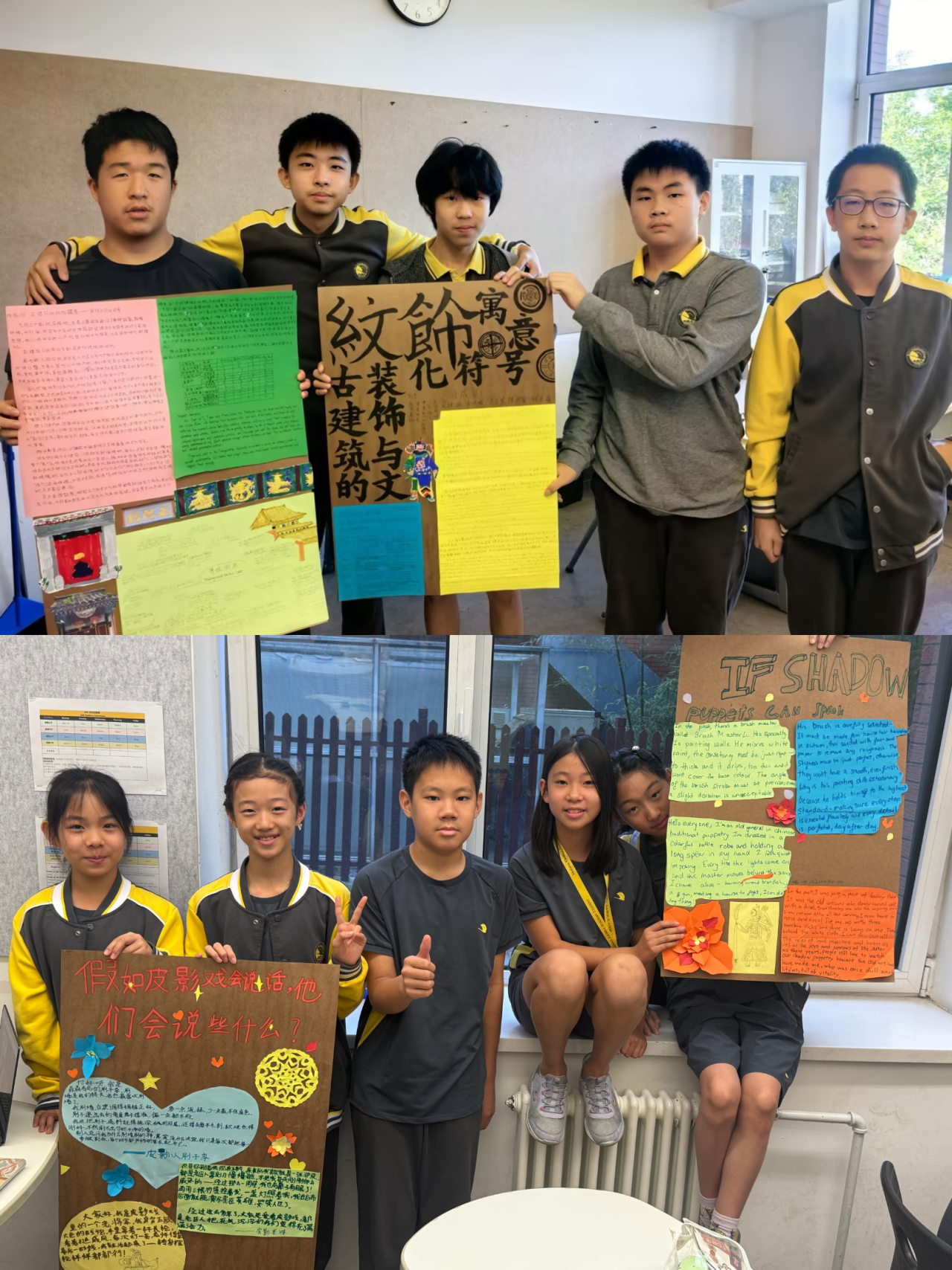
At the end of September, the program culminated with each student group designing a page for what will become a collective volume: The Haidian Kaiwen Academy Encyclopedia of Chinese Traditional Culture.
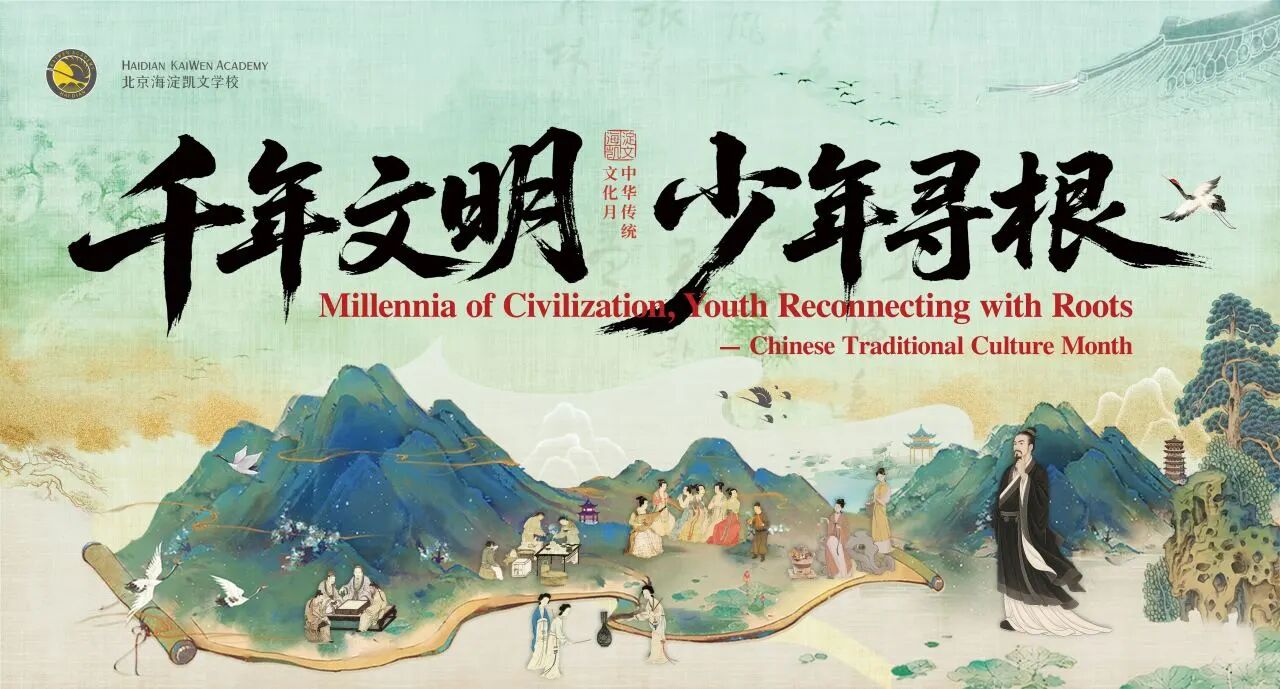
Chinese culture stretches back thousands of years. Understanding one’s own cultural history is essential to confidently engaging with the wider world.
As Principal Yongyuan Li shared at the opening ceremony: “Culture is never abstract—it is always concrete. The culture of a thousand years ago continues to shape who we are today. That is the power of culture.”
The Chinese Department designed a layered series of tasks for this project. Students selected from 34 cultural keywords, each choosing a theme aligned with their interests.
The process was intentionally structured to move from surface-level recognition to deeper analysis—guiding students from cultural symbols to cultural meaning.
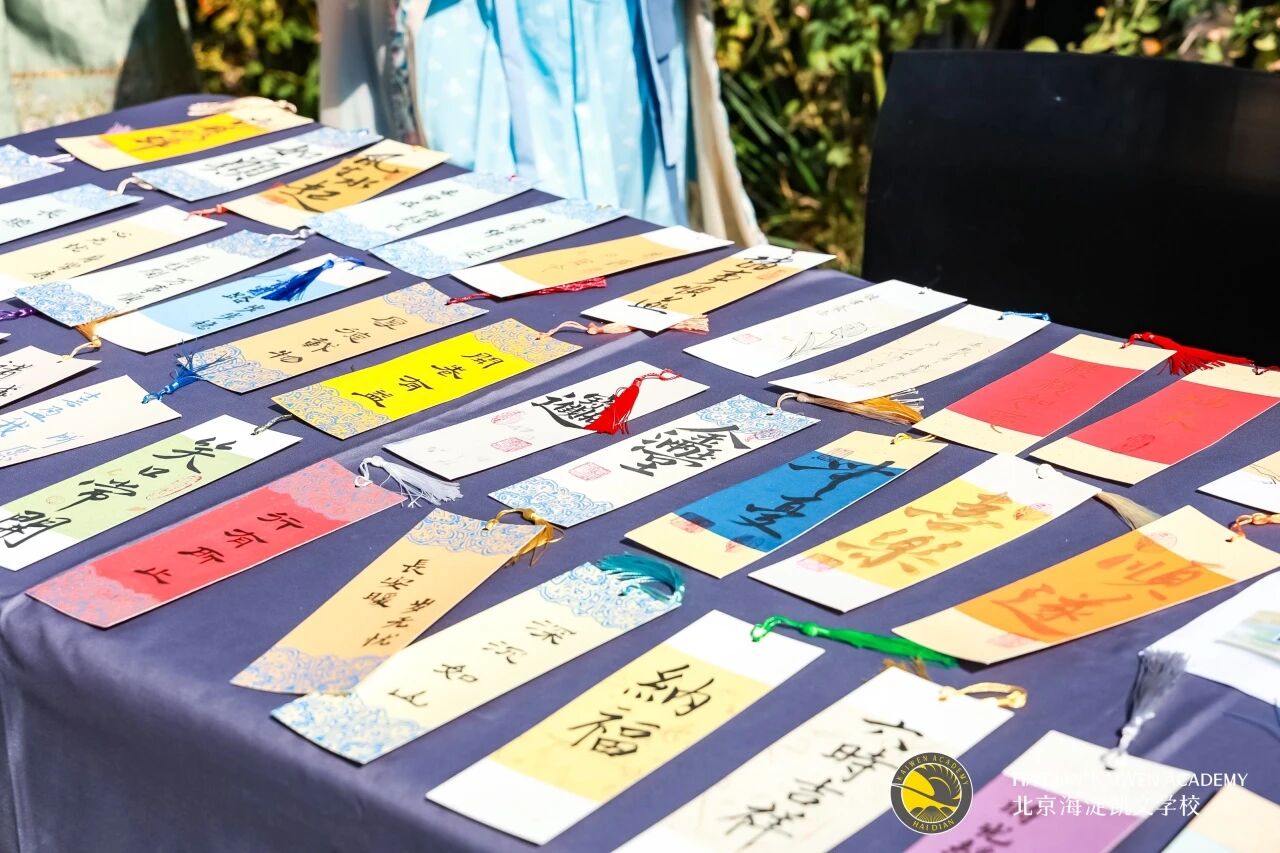
The project began with literature as an entry point. Through close reading of classic texts, students identified cultural symbols embedded in storytelling. Department head Mr. Zhennan Zhang shared two examples.
When discussing food culture, students analyzed a famous scene from Dream of the Red Chamber, in which the dish eggplant “qie xiang” reveals subtle social hierarchy beneath what appears to be a simple meal.
Another example came from Zengqi Wang’s essay “Duck Eggs at the Dragon Boat Festival.” At first glance, students interpreted it as nostalgia. Upon closer reading, they discovered something deeper—a profound pride and emotional identification with one’s hometown.
Through literature, students began to recognize that cultural meaning often resides beneath everyday details.
After forming initial understandings, students conducted deeper research. Beginning with academic sources and expanding outward, they built knowledge networks around their chosen themes.
As Mr. Zhang explained: “Students must drive the research themselves. They learn how to use tools, sift through large amounts of information, and identify what truly matters. In that process, their own thinking begins to emerge.” The inquiry extended beyond classroom research.
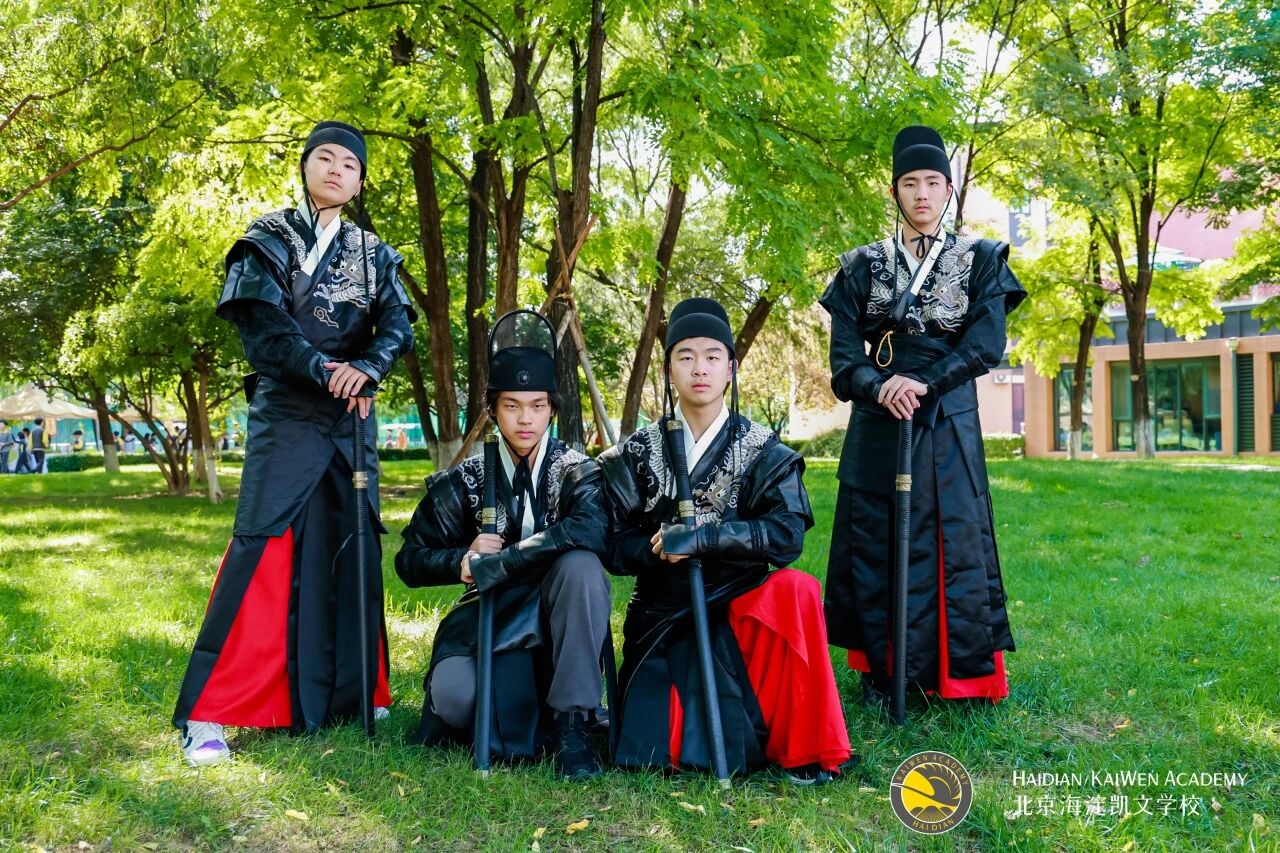
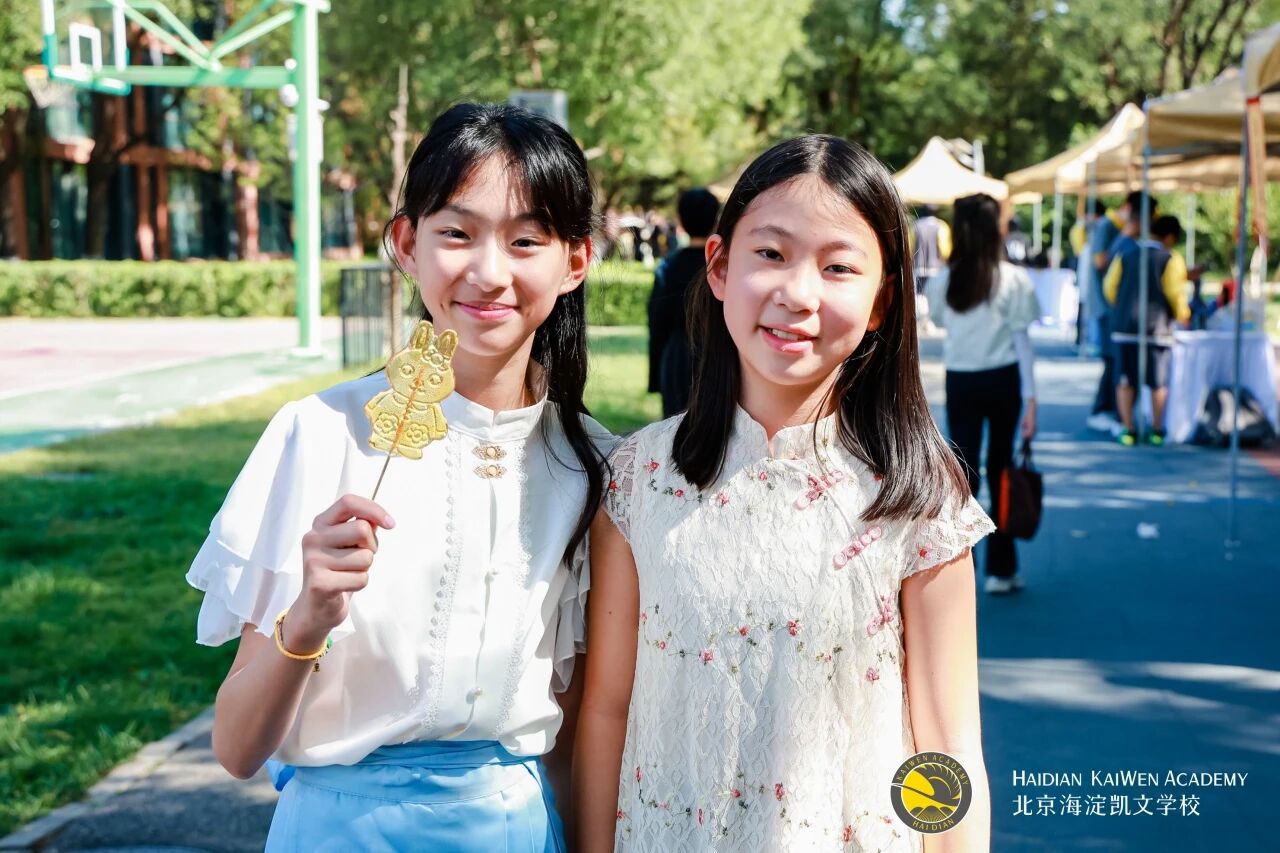
The school invited parents with relevant professional backgrounds to lead workshops and lectures:
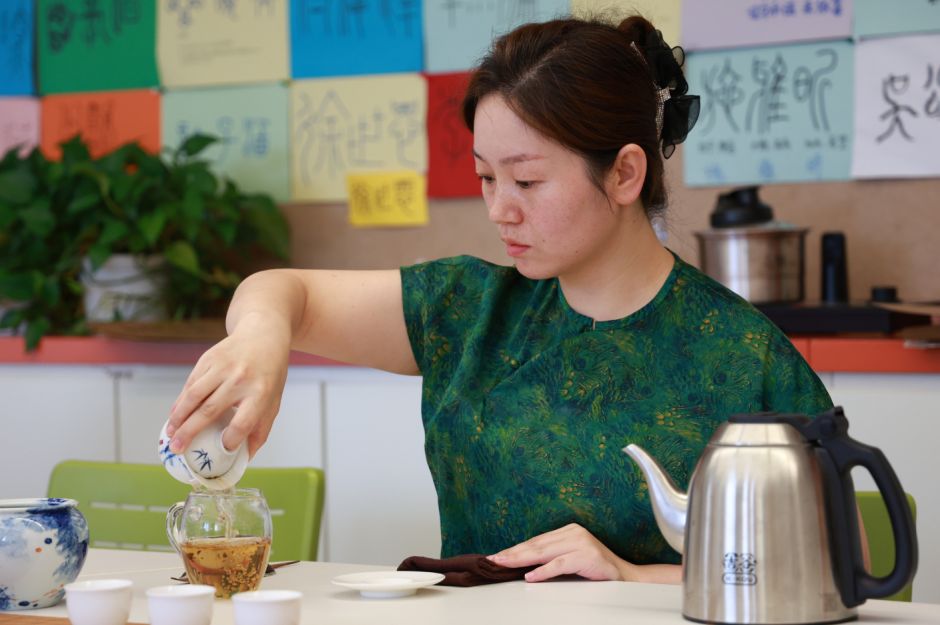
– A tea ceremony workshop guided students through the rituals and philosophy of Chinese tea culture.
– A Traditional Chinese Medicine lecture introduced both its theoretical foundations and practical wisdom.
– A Peking Opera session immersed students in vocal techniques and performance traditions.
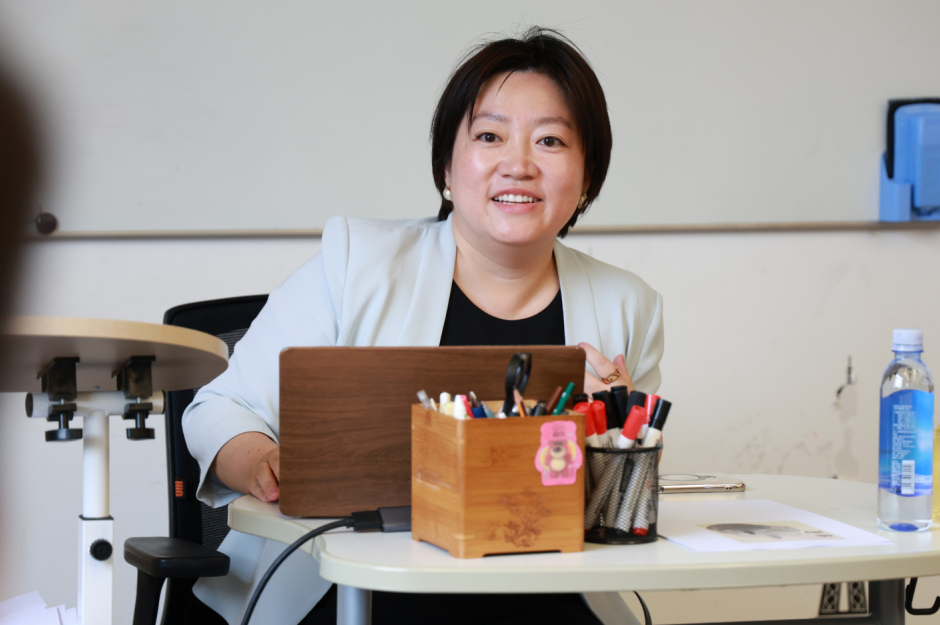
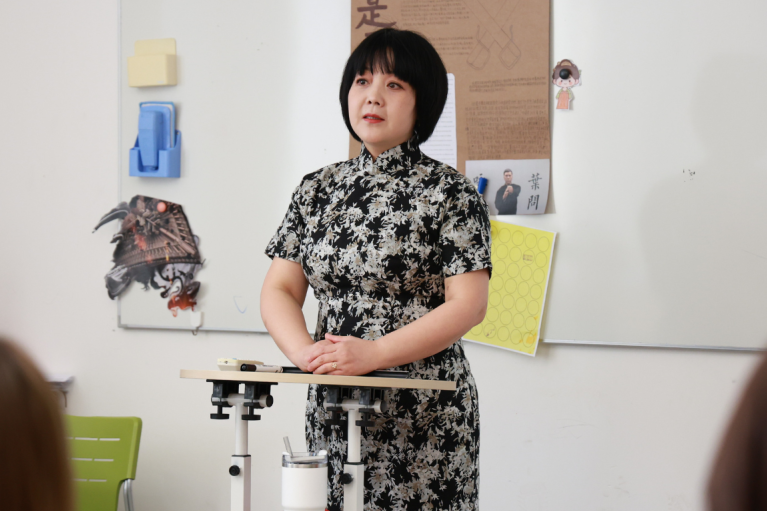
Additionally, the school welcomed Tianshuai Shao, Vice President of the Northern Kunqu Opera Theatre, who delivered a lecture on Kunqu performance, exploring its history, vocal techniques, and emotional expression. These experiences allowed students to encounter tradition not as abstraction—but as living practice.
If research helped students touch the surface of culture, questioning helped them enter its core. Students raised complex, nuanced questions:
– Does Western artistic influence reshape our understanding of Chinese calligraphy?
– Are traditional auspicious patterns foundations of culture—or constraints on creativity?
– How should we balance mass production with artisanal preservation?
– Has the meaning of Qixi Festival shifted from self-cultivation to romantic emphasis—and what does that shift reveal?
Importantly, many groups presented multiple perspectives rather than fixed conclusions. Students learned that cultural issues are rarely black and white. True understanding requires dialectical thinking.
Some groups went further, conducting interviews and on-site investigations.
The liuli and glassware group visited Liuliqu Village, known for imperial glazed tile production, and interviewed heritage craftsman Liu Yu about the challenges of preserving traditional glassmaking.
The “Brush, Ink, Paper, and Inkstone” group visited specialty shops. Though initially hesitant and even rejected, they eventually secured an interview with a shop owner—learning not only about calligraphy materials, but also about respect and perseverance.
Another group studying architectural symbolism explored Nanluoguxiang and surveyed university students about their understanding of traditional decorative motifs.
Through these investigations, culture became tangible—and personal.
Celebration and Continuity
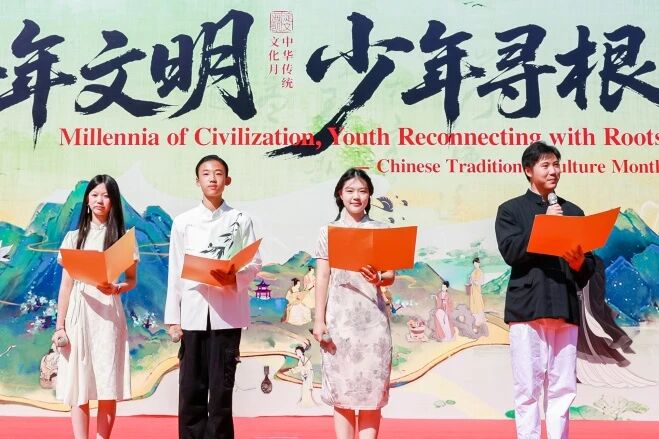
On September 30, the campus transformed into a vibrant cultural exhibition space. At the opening ceremony, Principal Li reiterated that culture lives in concrete forms—in literature, art, clothing, rituals, and everyday practices. Students and teachers walked the runway in traditional attire, celebrating the beauty of historical dress.
Vice Principal Mr. Scott Reid addressed the community, encouraging everyone to fully experience the festival. Performances followed: traditional dance, calligraphy demonstrations, acrobatics, choral singing, and instrumental ensembles. At the close of the ceremony, certificates were presented to parent contributors in appreciation of their support.
Following the ceremony, the campus fair opened. Thirty-four themed booths and six special exhibits lined the track, forming a “cultural corridor.” From Go (Weiqi) to blue-and-white porcelain, from the Mid-Autumn Festival to mythological creatures, each booth reflected a month of research.
Students presented their findings, led interactive activities, and invited visitors to engage with their themes. One booth, titled “A Glimpse of the Valley,” held a special purpose: student organizers hosted a charity sale supporting Liangshan公益 initiatives, donating all proceeds—an expression of cultural empathy and social responsibility.
The month may have concluded, but its impact continues. As Mr. Zhang reflected: “When our students step into the world, their cultural identity becomes their foundation. With roots, they carry confidence wherever they go.”
From literary analysis to debate, from interviews to public presentation, students spent a month in sustained inquiry. Perhaps their encyclopedia is not the most authoritative—but it is deeply human. Each page records a conversation between students and tradition. Each page carries forward heritage into a new era.
At Haidian Kaiwen Academy, cultural exploration is not about nostalgia. It is about grounding students in identity—so that their roots may become both foundation and wings.
 8610 - 8302 8588
 Principals.Office@hd.kaiwenacademy.cn
 No.65, Xingshikou Road, Haidian District, Beijing