
中文
On October 16, 2025, Professor Geoff Hayward, Professor of Education at the University of Cambridge, visited Beijing Haidian Kaiwen Academy and delivered a lecture focused on the Cambridge education model and university application preparation.
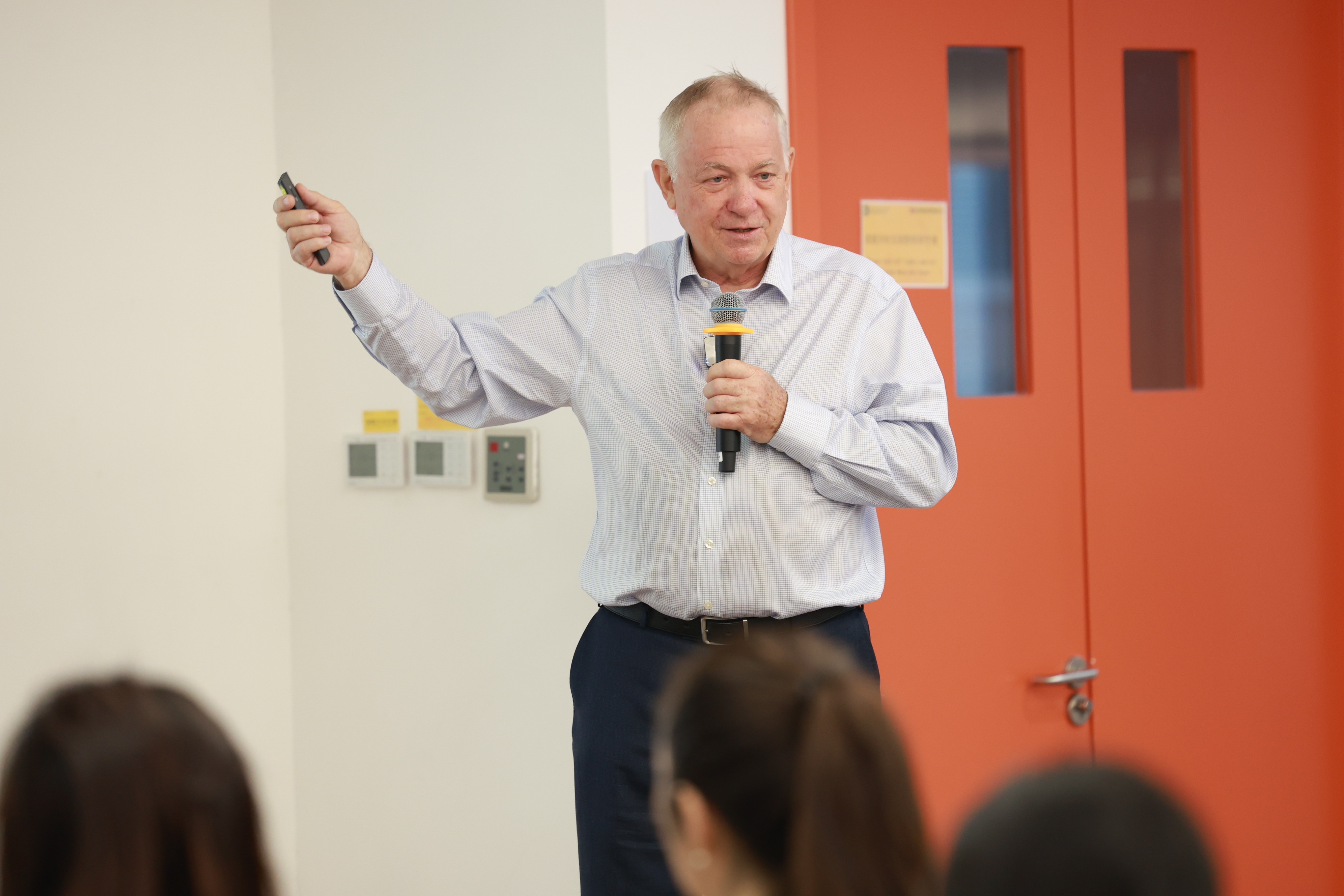
Professor Hayward began his academic career as a biology researcher at the University of Oxford and the University of Liverpool. He later spent five years teaching in the field of continuing education and went on to contribute extensively to teacher education and professional training at the Liverpool Institute of Higher Education, the University of Oxford, and the University of Leeds.
During his time at Oxford’s Department of Education, Professor Hayward served as Co-Director of the Nuffield Review of 14–19 Education and Training, a major UK education policy research initiative. He also held leadership roles at the Skills, Knowledge and Organisational Performance (SKOPE) Research Centre, funded by the UK Economic and Social Research Council (ESRC), where he served as Deputy Director and Research Director.
He later became Dean of the School of Education at the University of Leeds for three and a half years, before joining the University of Cambridge Faculty of Education in October 2014.
Haidian Kaiwen Academy has long been committed to advancing international education practices, expanding access to high-quality academic resources, and fostering strong collaboration between school and families.
Professor Hayward’s visit offered students, teachers, and parents an opportunity to gain first-hand insight into how top UK universities approach education and admissions preparation, as well as the core competencies these institutions value most. Prior to the lecture, Professor Hayward toured the Haidian Kaiwen campus, learning about the school’s learning environment, facilities, educational philosophy, and its emphasis on holistic student development.
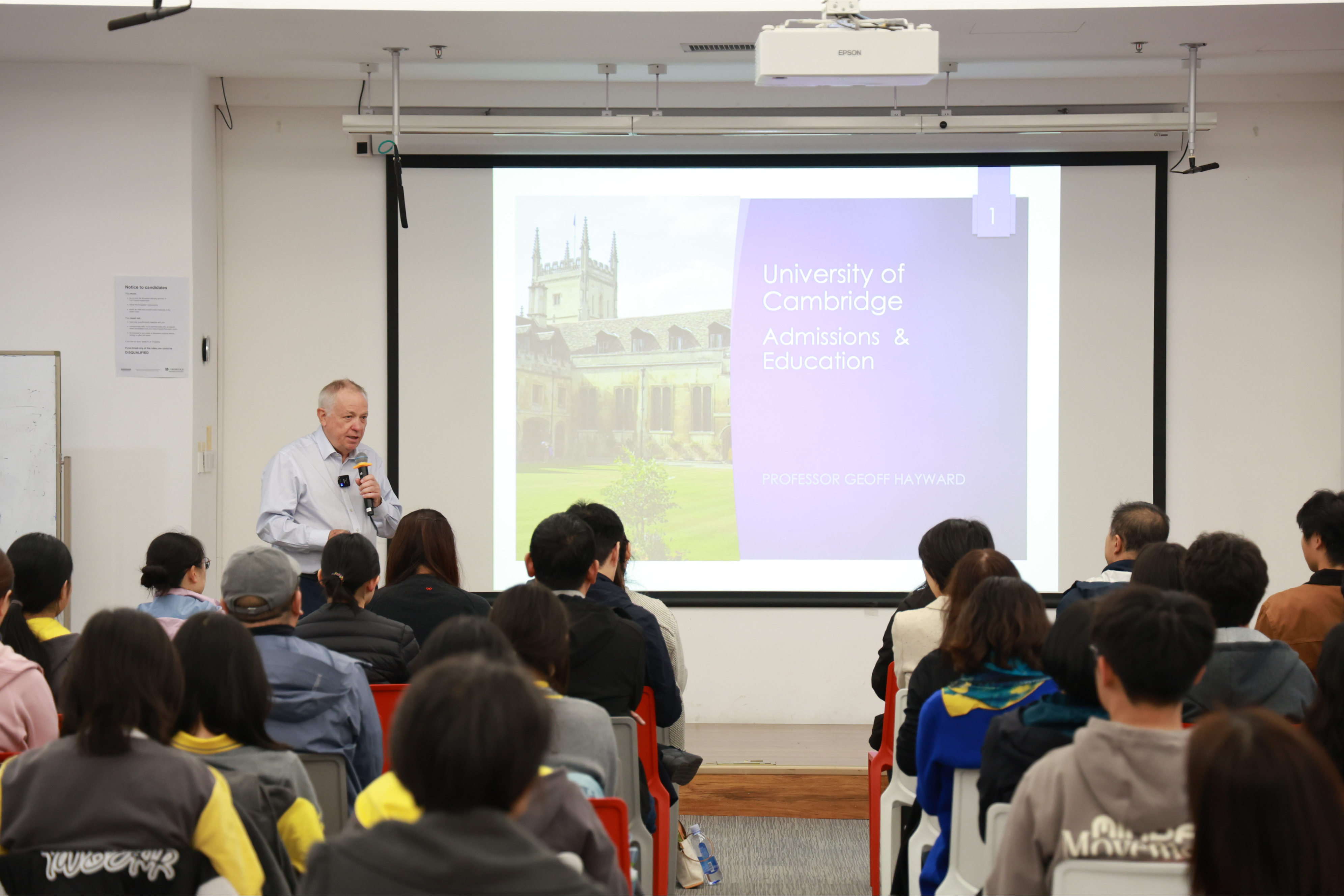
The lecture was held in the High School Building and was open to students and parents in Grades 9–12. Professor Hayward’s talk centered on Cambridge University’s educational approach and the realities of university preparation.
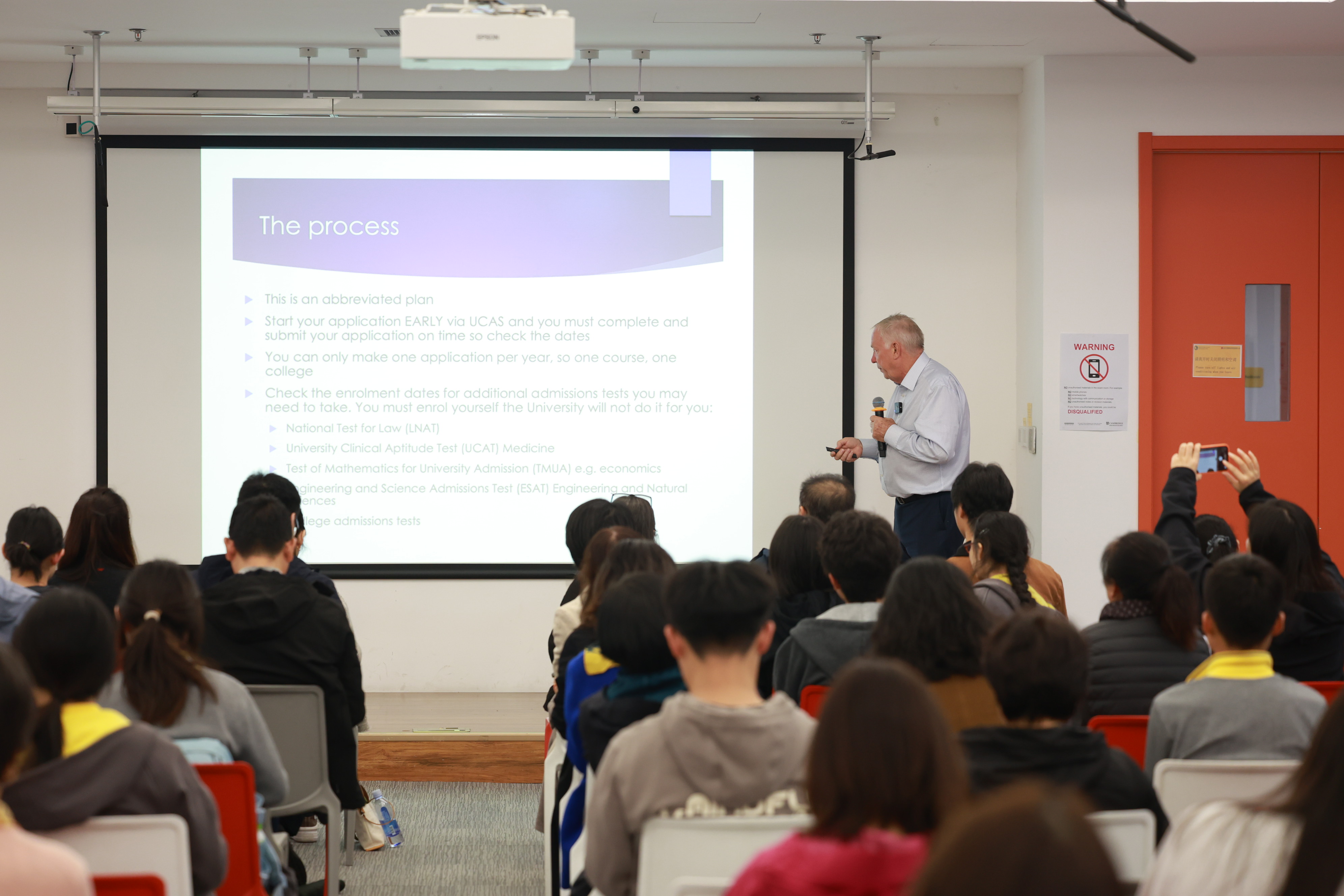
Addressing one of the topics students and families care about most, Professor Hayward provided a clear overview of the Cambridge application process, covering preparation before applying, the application timeline, evaluation criteria, and practical advice for students.
He first outlined several key characteristics of the Cambridge application process:
– Applications are submitted earlier than most UK universities
– The process is longer, with multiple stages and deadlines
– Competition is extremely intense
– Academic standards are exceptionally high
Professor Hayward emphasized several essential steps:
– Course research: Study Cambridge courses carefully to ensure alignment with academic interests and long-term goals
– Requirement review: Examine college websites closely to confirm eligibility
– Additional tests: Identify whether subject-specific admissions tests are required and note timelines
– College selection: Cambridge has 31 colleges, including two women-only colleges—Murray Edwards College and Newnham College
He also highlighted important points once students enter the application stage:
– Apply early: Cambridge deadlines are earlier than most UK institutions
– One choice only: Applicants may apply to one course at one college per year
– Check email regularly: Universities communicate requests for additional materials by email
Using Pembroke College as an example, Professor Hayward illustrated the scale of admissions work:
“Each year, Pembroke admits around 200 students, but receives approximately 1,500 applications.”
As a result, admissions officers are unable to respond to individual inquiries, making it essential for applicants to monitor official communications carefully.
Professor Hayward explained that admissions decisions are based on a holistic evaluation, including:
– Academic performance
– School references
– Personal statements
– Submitted work or portfolios
– Written test results
– Interview performance
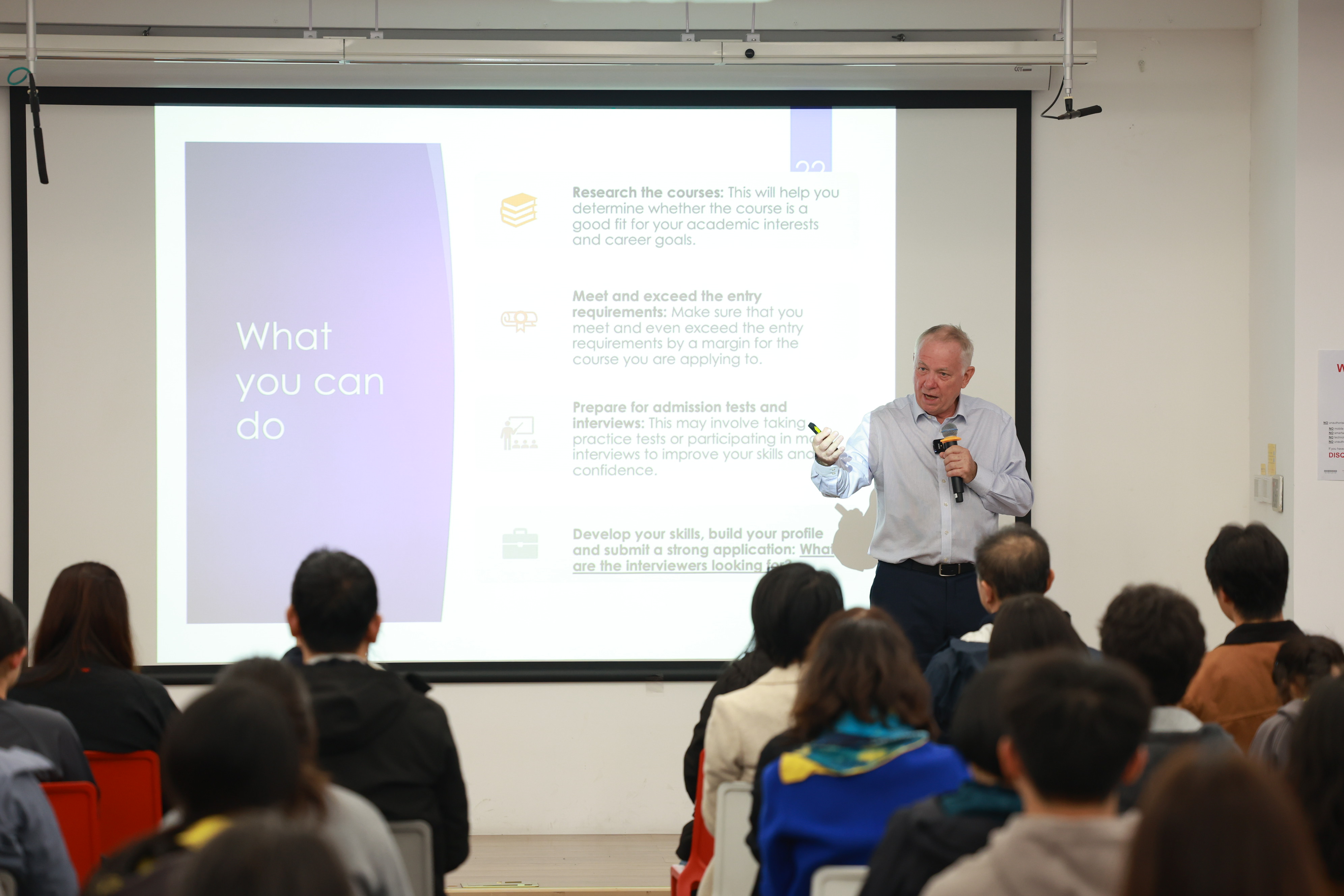
Professor Hayward offered the following guidance:
– Understand the course deeply: Know what you are applying for and why
– Meet—and exceed—requirements: Strong applicants go well beyond minimum standards
– Prepare seriously for tests and interviews: Practice improves clarity, confidence, and adaptability
– Strengthen skills and experience: Build a compelling academic profile and understand what admissions tutors are truly looking for
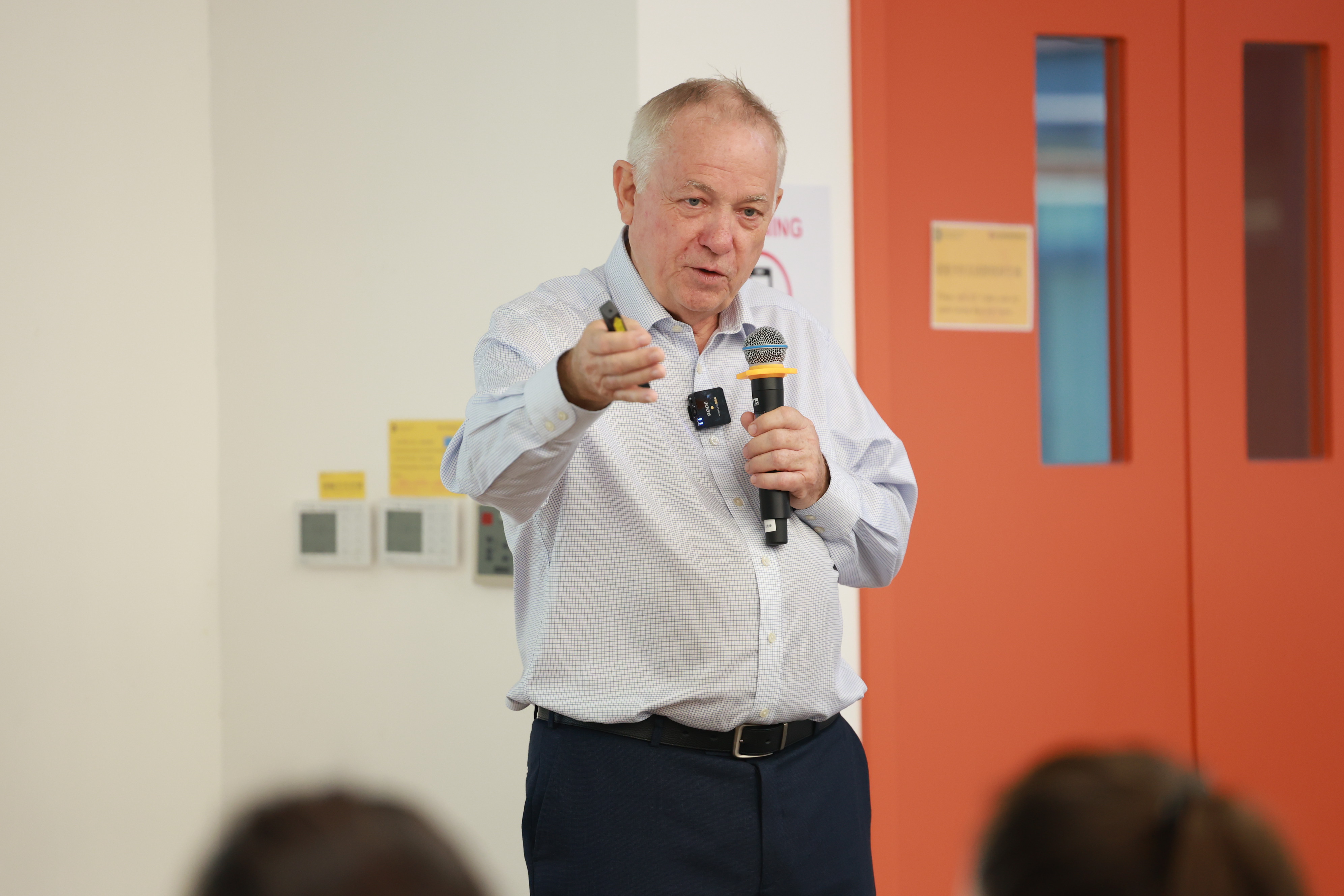
Professor Hayward placed particular emphasis on the interview process, noting that it reflects Cambridge’s core educational philosophy:
“Interviewers are primarily assessing a student’s academic and research potential.”
He outlined key qualities interviewers look for, including:
– Academic strength: Solid subject knowledge and learning capacity
– Intellectual curiosity: Genuine interest in the field
– Critical thinking and problem-solving: Ability to analyze and reason
– Communication: Clear expression of complex ideas
– Independent thinking: Forming and defending original viewpoints
Beyond these criteria, he encouraged students not to be afraid of intellectual risk-taking and to support their ideas with thoughtful reasoning.
After discussing admissions, Professor Hayward shifted the focus to teaching and learning at Cambridge.
He described a system built around small-group discussions and close faculty mentorship, where students engage deeply with readings, debate ideas with peers, and actively construct knowledge rather than passively receive it.
In the context of the AI era, Professor Hayward shared a clear perspective:
AI should support thinking—not replace it.
He summarized the essence of Cambridge learning with a principle often shared in academic discussions:
“There is no right answer, only stronger and weaker arguments.”
The emphasis on critical thinking, effective communication, and complex problem-solving is not only central to Cambridge admissions, but also to students’ long-term development. These values closely align with Haidian Kaiwen Academy’s inquiry-based learning approach, offering students meaningful guidance as they prepare for university and beyond.
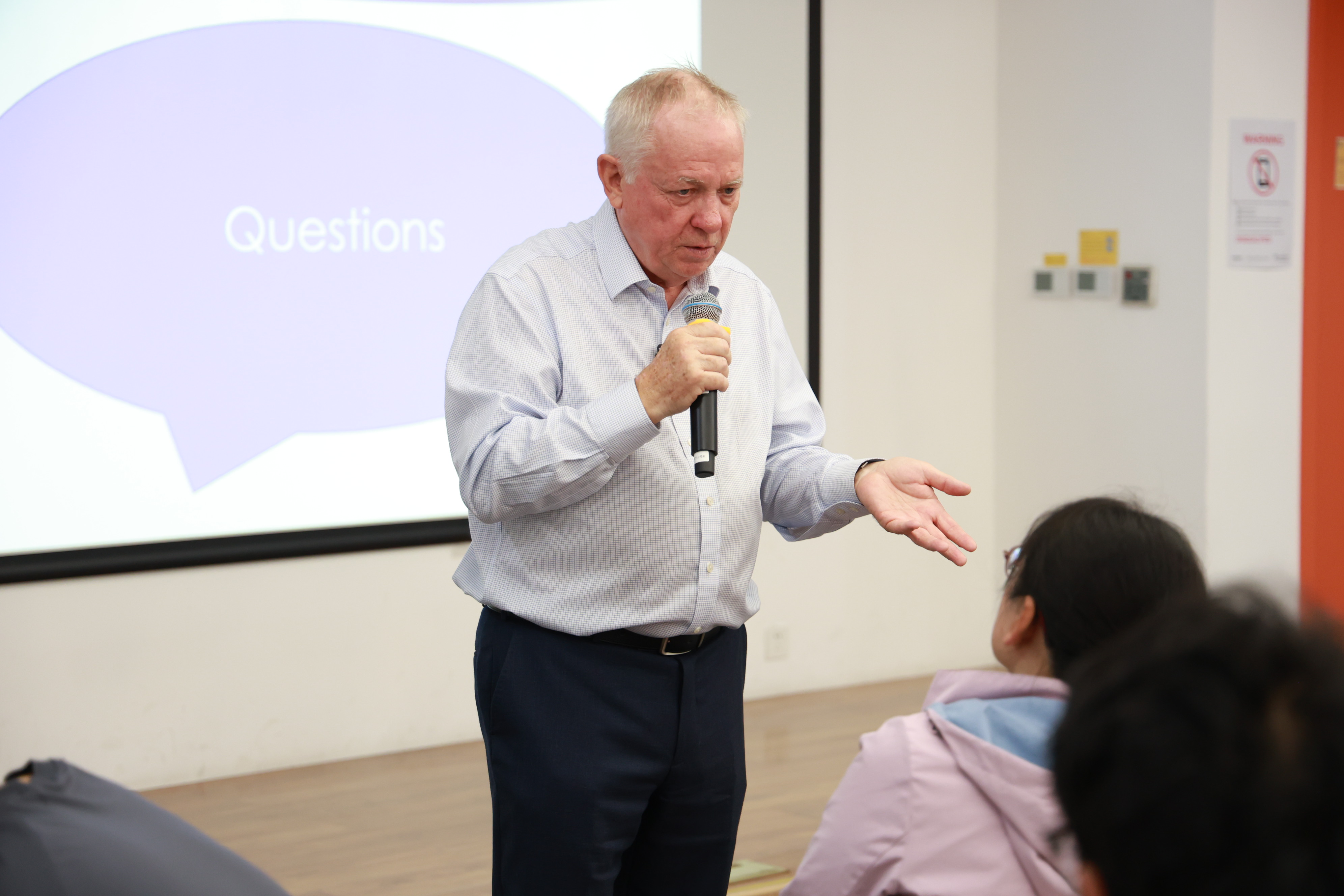
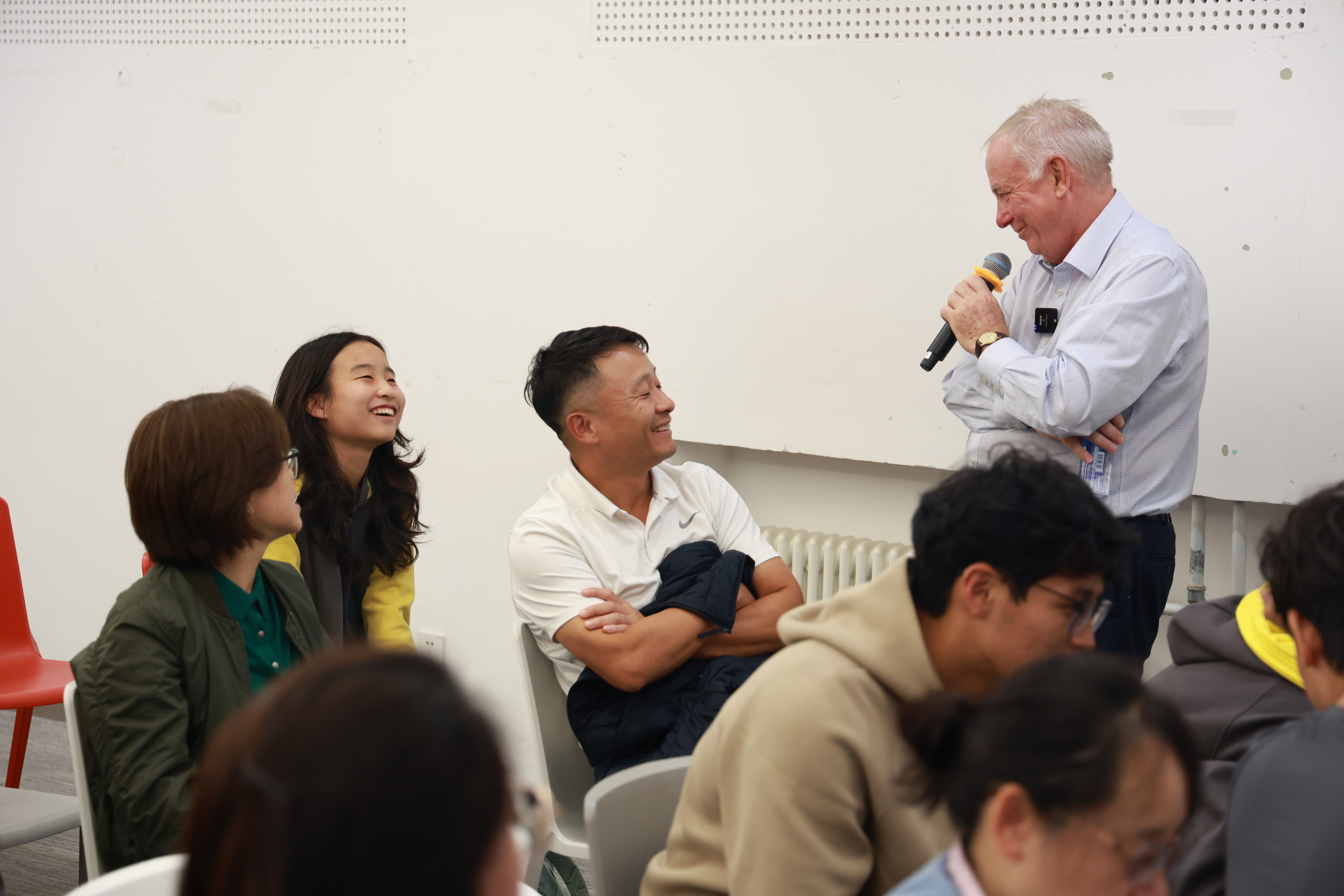
In the final Q&A session, students and parents actively engaged with Professor Hayward, raising questions about:
– Academic expectations for applicants
– Choosing university majors
– Building connections with university faculty
– Recommended reading strategies
Drawing on his academic background and education research experience, Professor Hayward offered thoughtful, practical, and insightful responses.
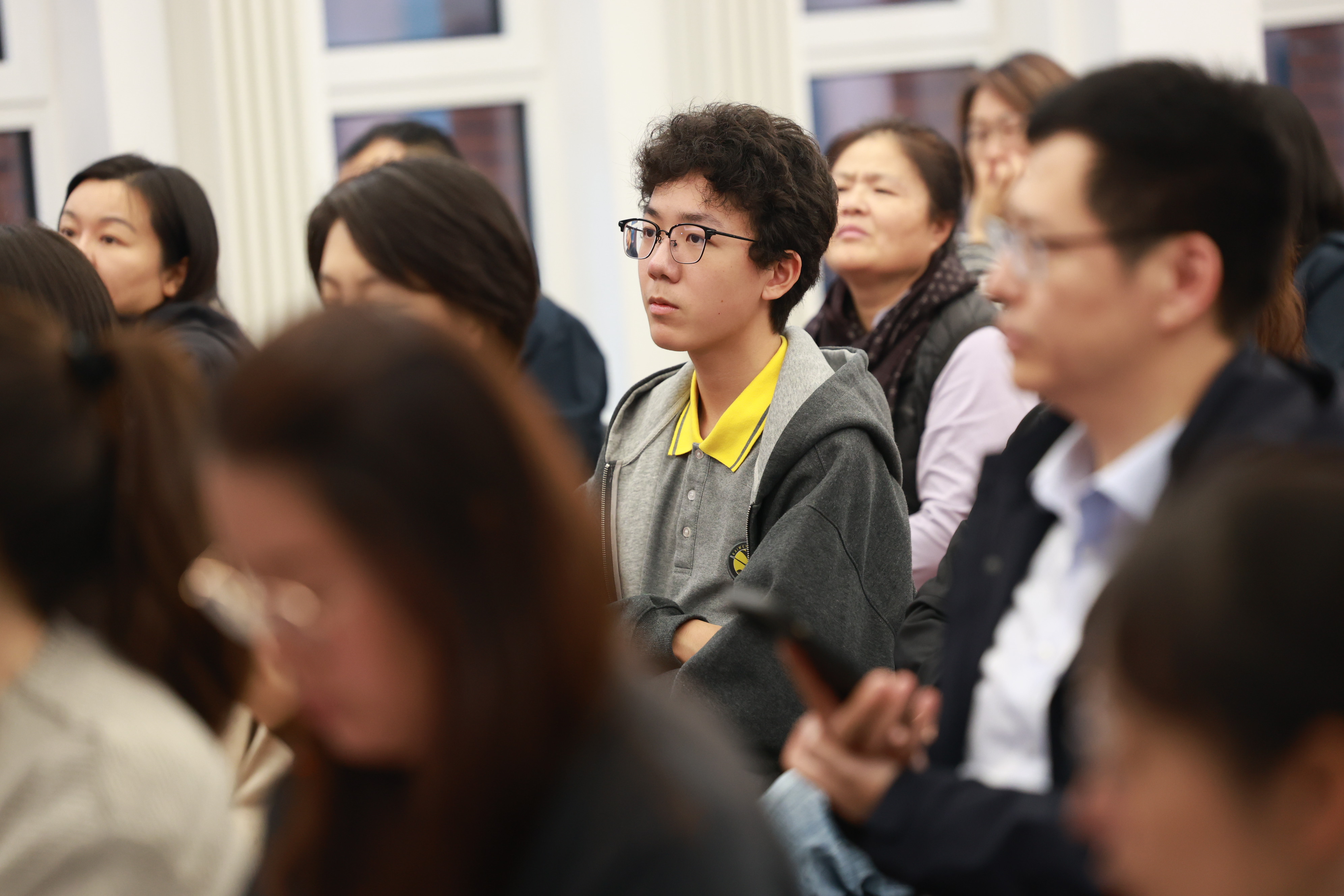
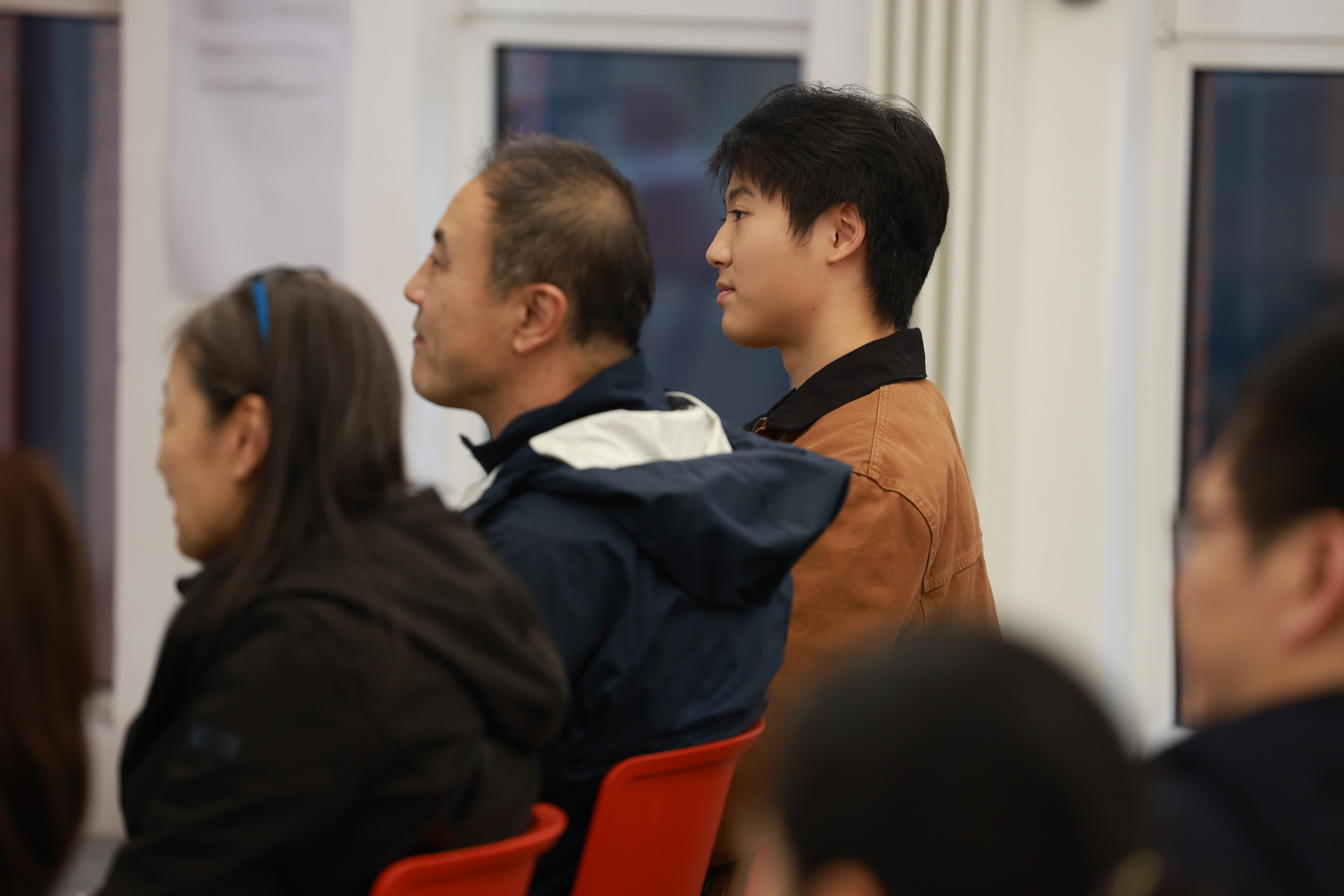
By introducing world-class educational perspectives and creating opportunities for direct dialogue with leading scholars, Beijing Haidian Kaiwen Academy continues to expand students’ global outlook and encourage deep reflection on future pathways.
Professor Geoff Hayward’s visit provided students and families with a valuable window into Cambridge University’s educational philosophy and admissions preparation. Looking forward, Haidian Kaiwen Academy will continue to promote international academic exchange and support each student’s long-term growth and development.
 8610 - 8302 8588
 Principals.Office@hd.kaiwenacademy.cn
 No.65, Xingshikou Road, Haidian District, Beijing