
中文
At Beijing Haidian Kaiwen Academy, mathematics is more than formulas and calculations. It is a way of thinking, a way of exploring the world, and a way for students to experience problem-solving as something meaningful and fun. The Primary School Mathematics Carnival at Haidian Kaiwen Academy brings this belief to life. Through hands-on games and creative challenges, students move from thinking about math to actively doing math.
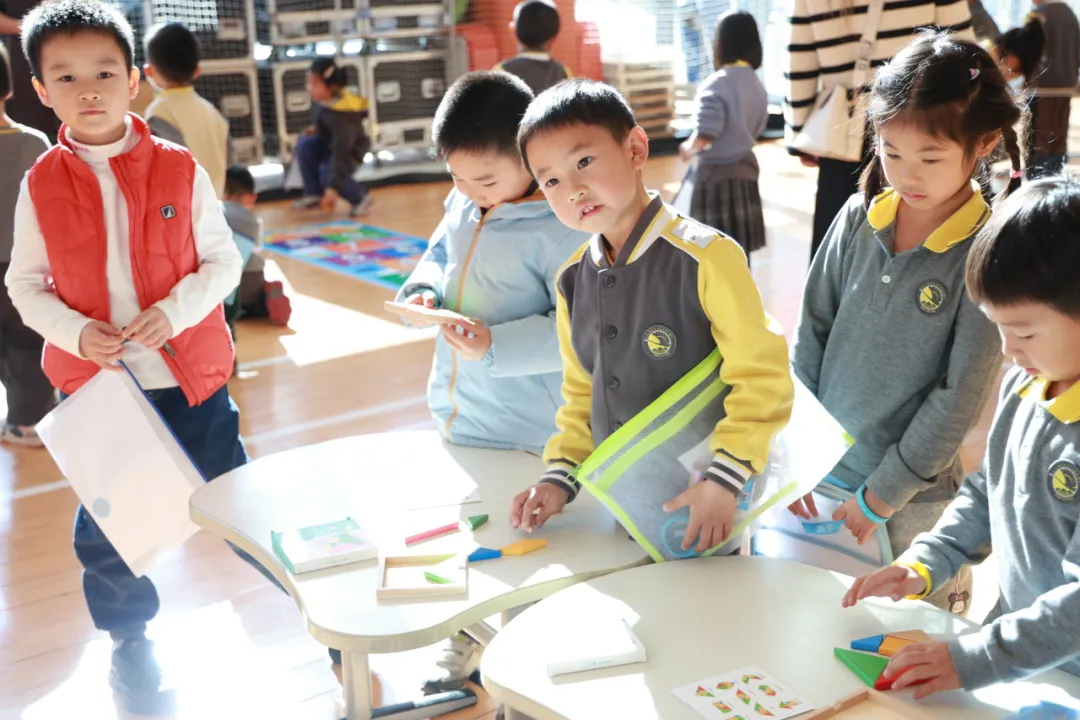
On November 20, the Primary School Mathematics Carnival wrapped up with a campus full of energy, curiosity, and proud smiles. Centered on the theme “Decode Spatial Mysteries, Explore the World of Mathematics,” this annual event transformed abstract concepts into real, tangible experiences and turned logical thinking into playful exploration.
Rather than sitting with worksheets, students rotated through activity stations, solving puzzles, collaborating with classmates, and discovering that math can be engaging, intuitive, and even joyfu
"How do we help students feel confident in math instead of anxious?"
"How can abstract ideas become something students can see, touch, and enjoy?"
These questions guided the planning process months in advance. Beginning in late September, the Primary School math team carefully designed activities that matched students’ developmental stages and learning needs.
Ms. Emily Chen, Head of the Primary School Mathematics Department, shared that the goal of the Math Carnival was never to simply “gamify” math drills.
Instead, the focus was on helping students build core mathematical competencies through experience — allowing understanding to grow naturally as students explore, try, reflect, and try again.
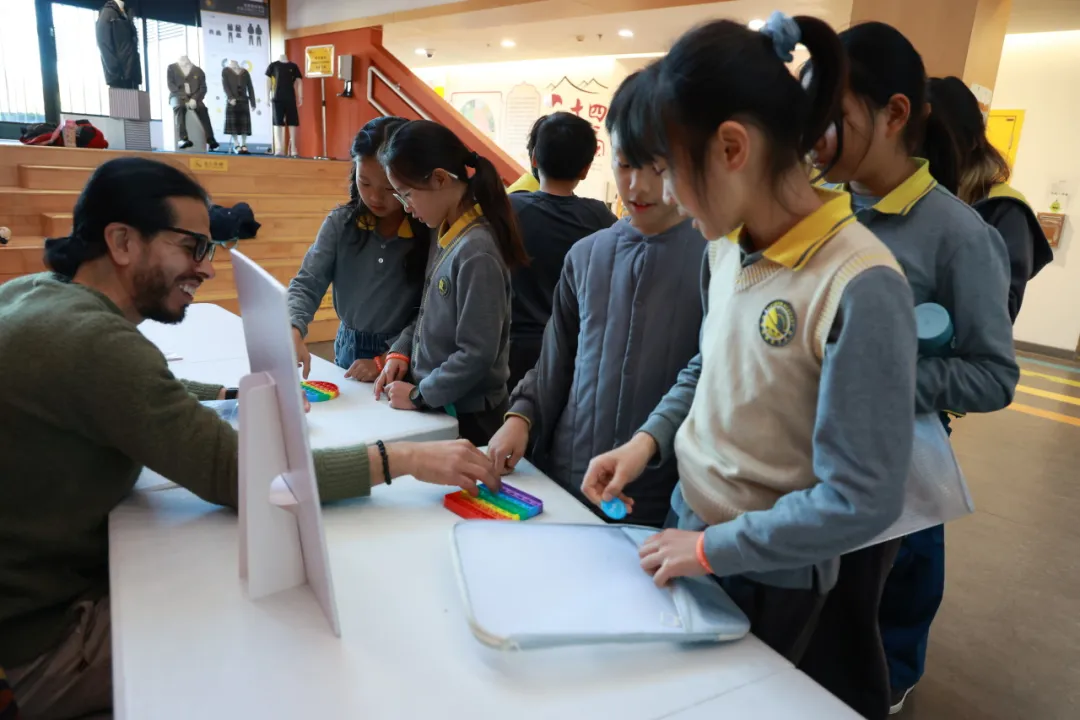
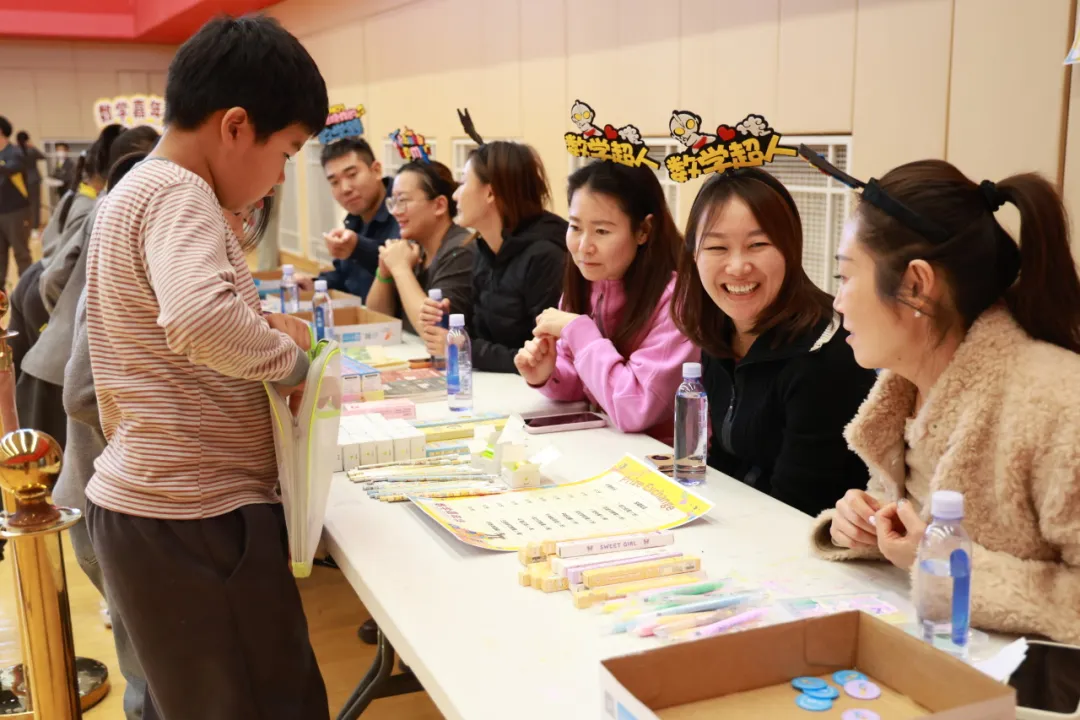
Each game station offered a challenge. Students earned points by completing tasks and exchanged those points for small prizes, creating a sense of motivation and accomplishment throughout the day.
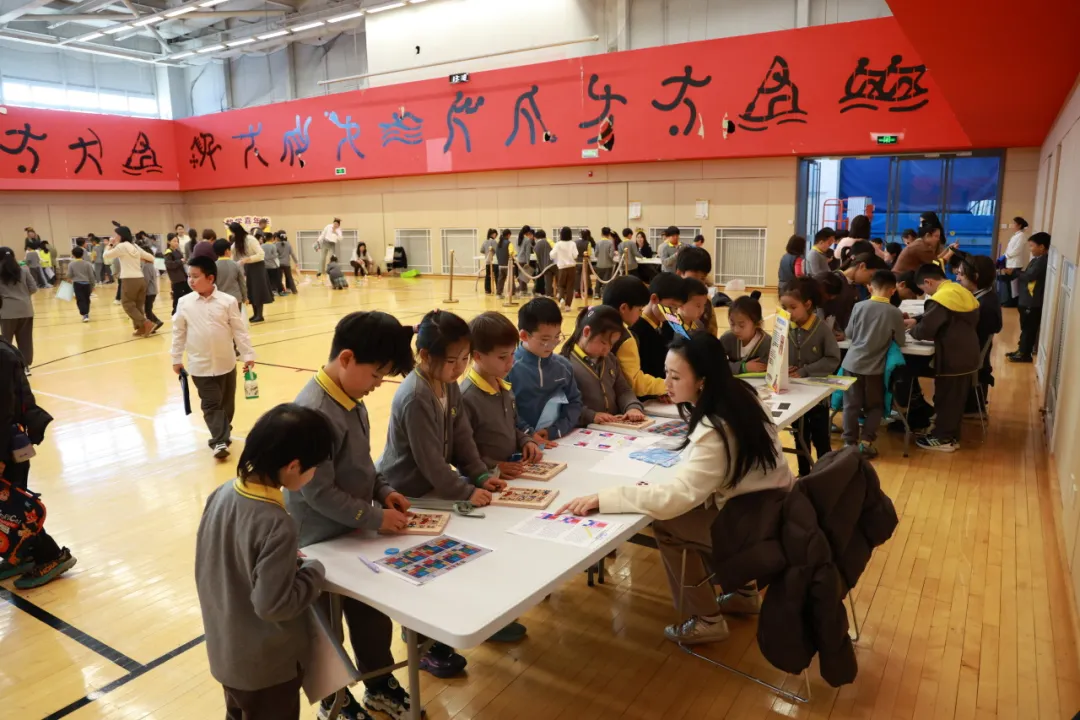
Throughout the carnival, teachers intentionally embedded four essential math competencies into each activity:
– Spatial Sense and Geometric Intuition
Students practiced visualizing shapes by rotating, breaking apart, and rebuilding figures in their minds — an important step from concrete thinking to abstract reasoning.
– Reasoning and Mathematical Modeling
Through rules and constraints, students analyzed information, made logical inferences, and built step-by-step solutions.
– Number Sense and Computational Fluency
Instead of mechanical calculation, students flexibly applied operations to reach goals — whether balancing a scale or finding combinations that make 24.
– Application and Problem Solving
Students learned to translate real problems into mathematical models, plan solutions, and test their thinking.
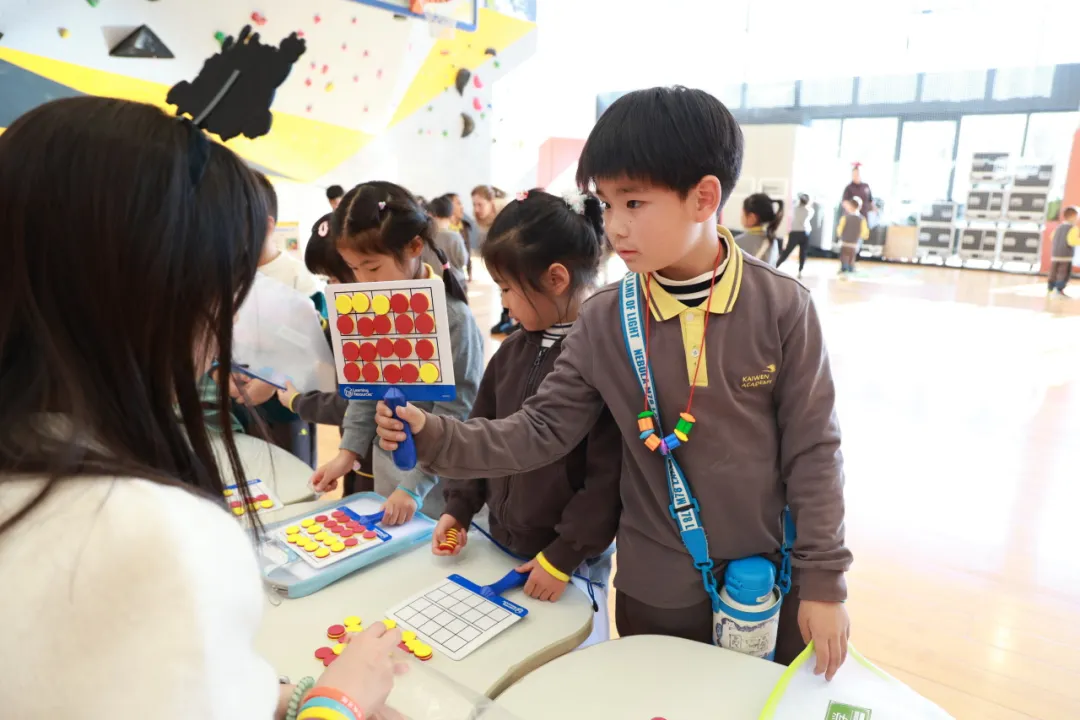
Activities such as Rubik’s Cube, Magic Ruler, and Tangrams strengthened spatial awareness and mental rotation skills. Sudoku, Minesweeper, and logic-based challenges encouraged students to analyze patterns and reason carefully. Games like the 24-Point Challenge and balance puzzles placed arithmetic into meaningful problem-solving contexts.
Meanwhile, classics such as the Tower of Hanoi and sliding puzzles guided students through the full modeling process — from understanding the problem to testing a solution.
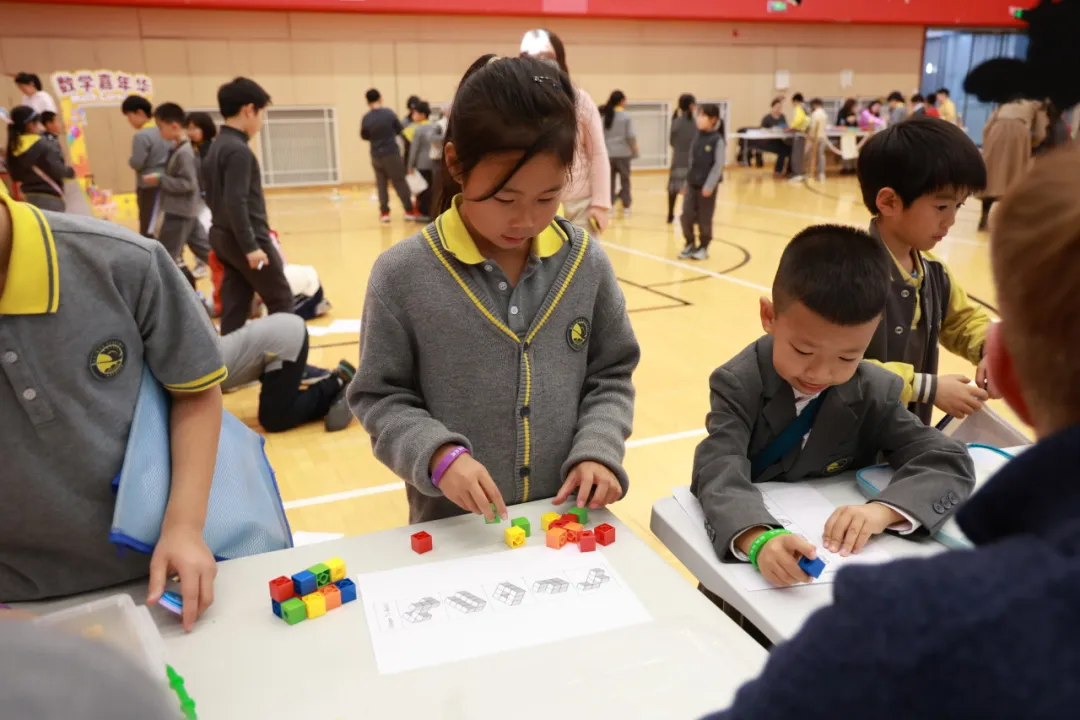
To support students at every stage, activities were designed by grade level:
– GK–G1: Tangrams, rainbow necklaces, and hopscotch introduced early ideas of shape and quantity.
– G2–G3: Sudoku, spatial puzzles, and logic games strengthened reasoning and visualization.
– G4–G5: Advanced challenges such as the 24-Point Game, Tower of Hanoi, and Minesweeper pushed students toward deeper strategy and logical thinking.
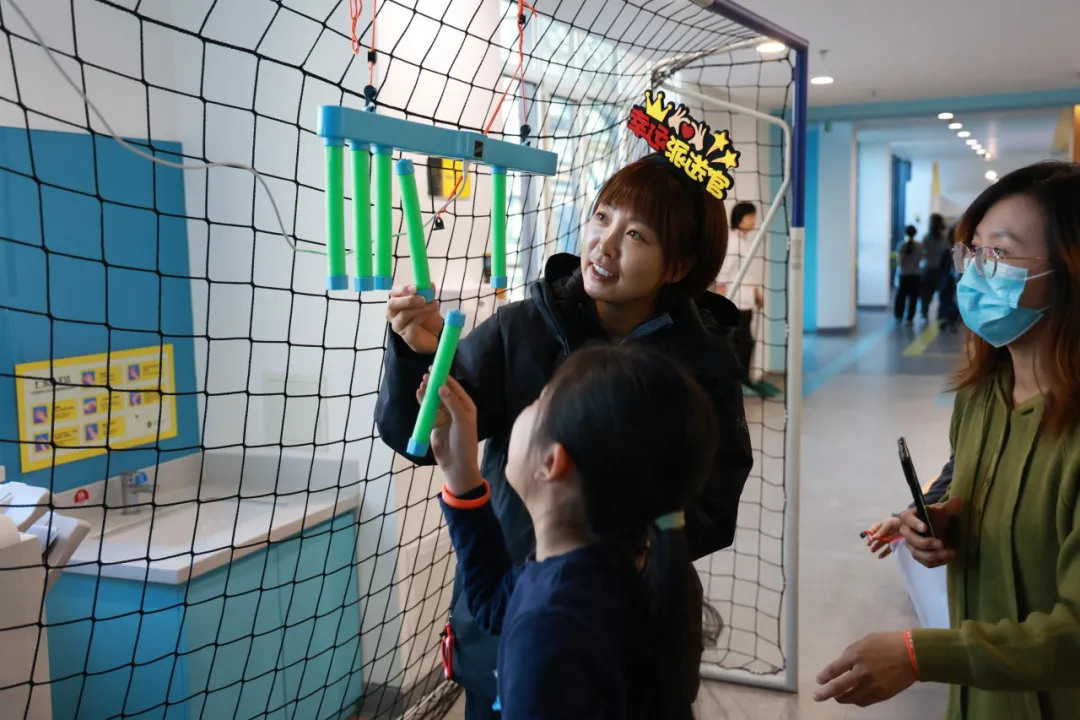
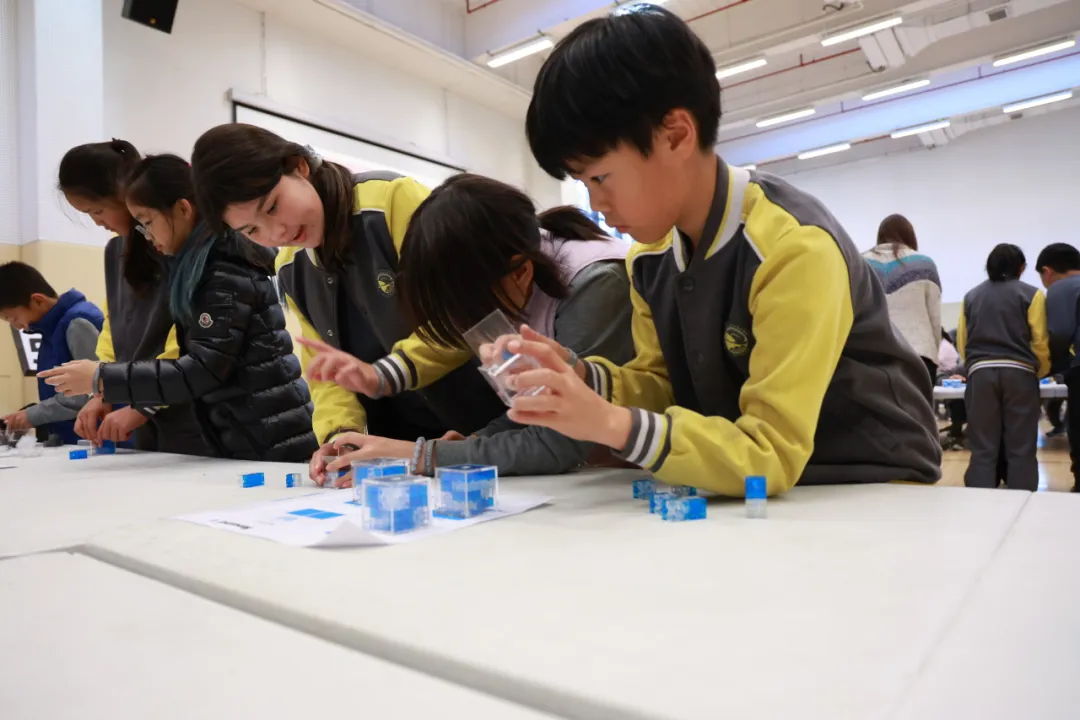
For the first time, students in Grades 4 and 5 took part in the “Master of Space” Challenge, a team-based competition focused on 3D spatial construction.
Working in class teams, students used building blocks to recreate complex structures based on visual prompts. The competition ran in three timed rounds, with teams earning points for accuracy and teamwork. Between rounds, students eagerly discussed strategies and shared insights with teammates — learning from experience, not memorization.
Class 404 and Class 503 earned top honors, but the true success of the challenge was the collaboration, communication, and confidence students demonstrated throughout.
At its heart, the Mathematics Carnival helps students move from “I have to learn math” to “I want to learn math.”
Through playful challenges, students experienced the satisfaction of solving problems and the joy of thinking deeply — building intrinsic motivation along the way.
Teachers across subjects worked together to support the event, and parent volunteers joined as prize helpers, witnessing firsthand how their children approached challenges with confidence and curiosity.
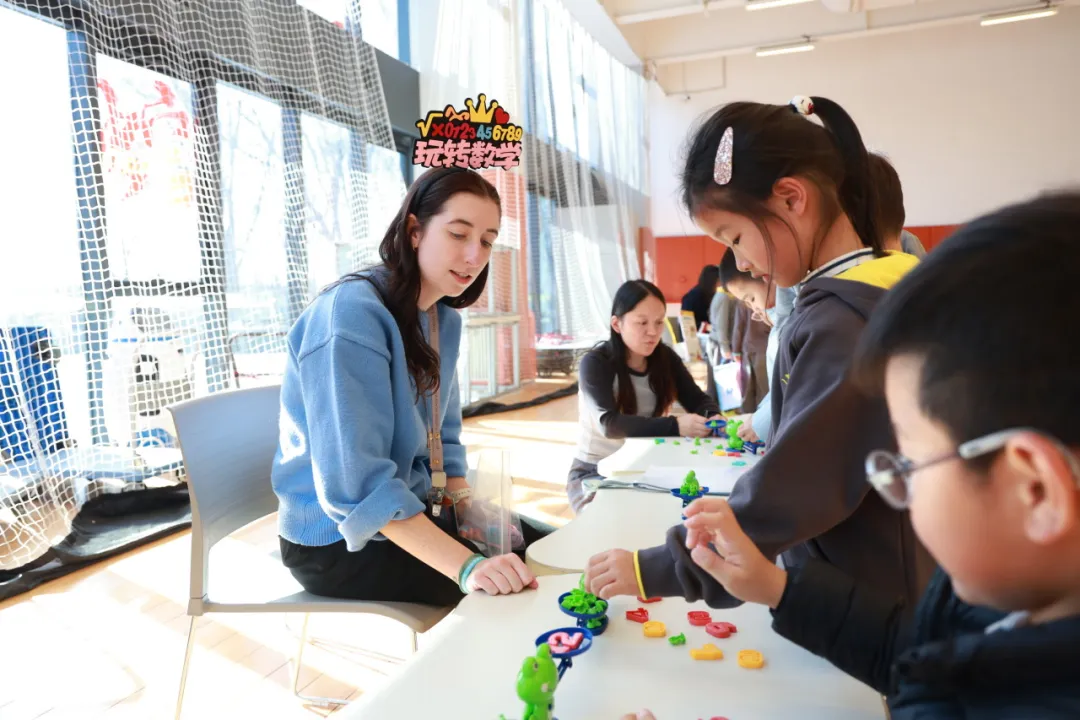
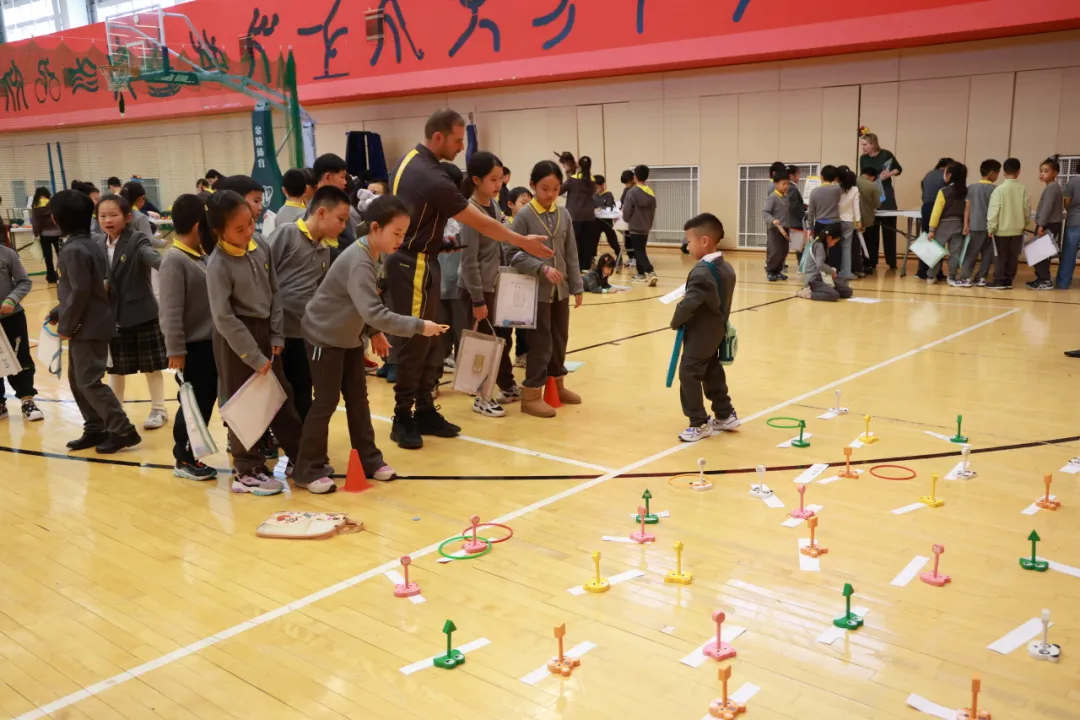
Some students discovered a natural sensitivity to shapes. Others felt the excitement of solving a challenging puzzle for the first time.
When a child who once said “math is too hard” asks to try again tomorrow — those moments matter. The laughter, teamwork, and shared problem-solving experiences from the Mathematics Carnival become lasting memories that shape how students see learning itself.
At Haidian Kaiwen Academy, we will continue creating learning experiences like this — offering time, space, and the right environment for students to grow, explore, and discover at their own pace.
 8610 - 8302 8588
 Principals.Office@hd.kaiwenacademy.cn
 No.65, Xingshikou Road, Haidian District, Beijing