
中文
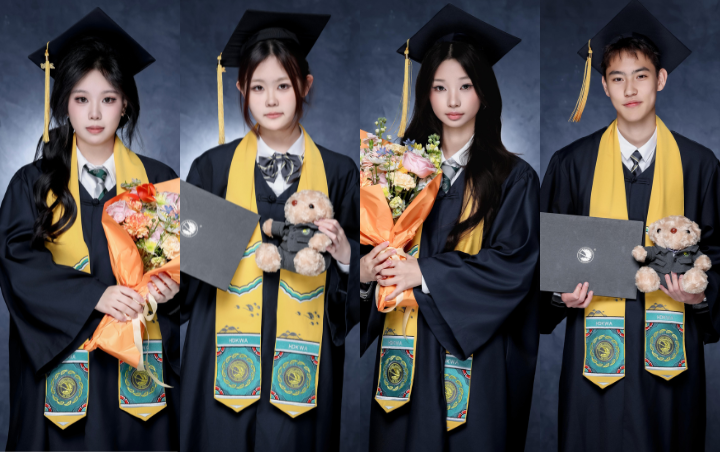
Sometimes, when people face important choices, they are drawn to a certain kind of certainty.
For students first exploring possible academic majors, some STEM-oriented disciplines naturally offer that feeling. Mathematical theorems follow clear logic. Chemical reactions unfold through equations. Code runs step by step along structured lines of reasoning.
In conversations with students, we came to understand that, during adolescence, this kind of certainty—the sense that a correct process can lead to a clear answer—often provides comfort and confidence.
What is most encouraging, however, is that once students developed these “certain” tools, they did not hide inside their comfort zones. Instead, they found the courage to apply those tools to questions that do not yet have, and may never have, standard answers.
This reflects an important part of the educational landscape at Haidian Kaiwen Academy: knowledge is not confined to tests and classrooms. Built on a strong academic foundation, learning here also carries freedom, courage, and perspective. Students are encouraged to move toward real-world problems, accept uncertainty along the way, and believe that their thinking can resonate with the world beyond school.
In many ways, the stories of students are also the story of Beijing Haidian Kaiwen Academy. Each student’s growth becomes part of the living memory of this community. This time, through the voices of several Class of 2026 graduates, we would like to share a few of those memories.
Among them are Yuyin Liu, who joined Haidian Kaiwen Academy in elementary school; Ziping Tian, who transferred during middle school; and Yanqiao Yang and Yanxi Han, who shifted academic tracks after China’s high school entrance examination.
They entered this community at different moments in their lives. Now, they are preparing to set out from here together. Through their reflections, we hope to show the many faces of student growth—and the many possible paths a young person can take.
Haidian Kaiwen Academy Class of 2026
Columbia University & City University of Hong Kong Joint Bachelor’s Degree Program | Computational Mathematics
University of California, San Diego | Mathematics | USD 40,000 Scholarship
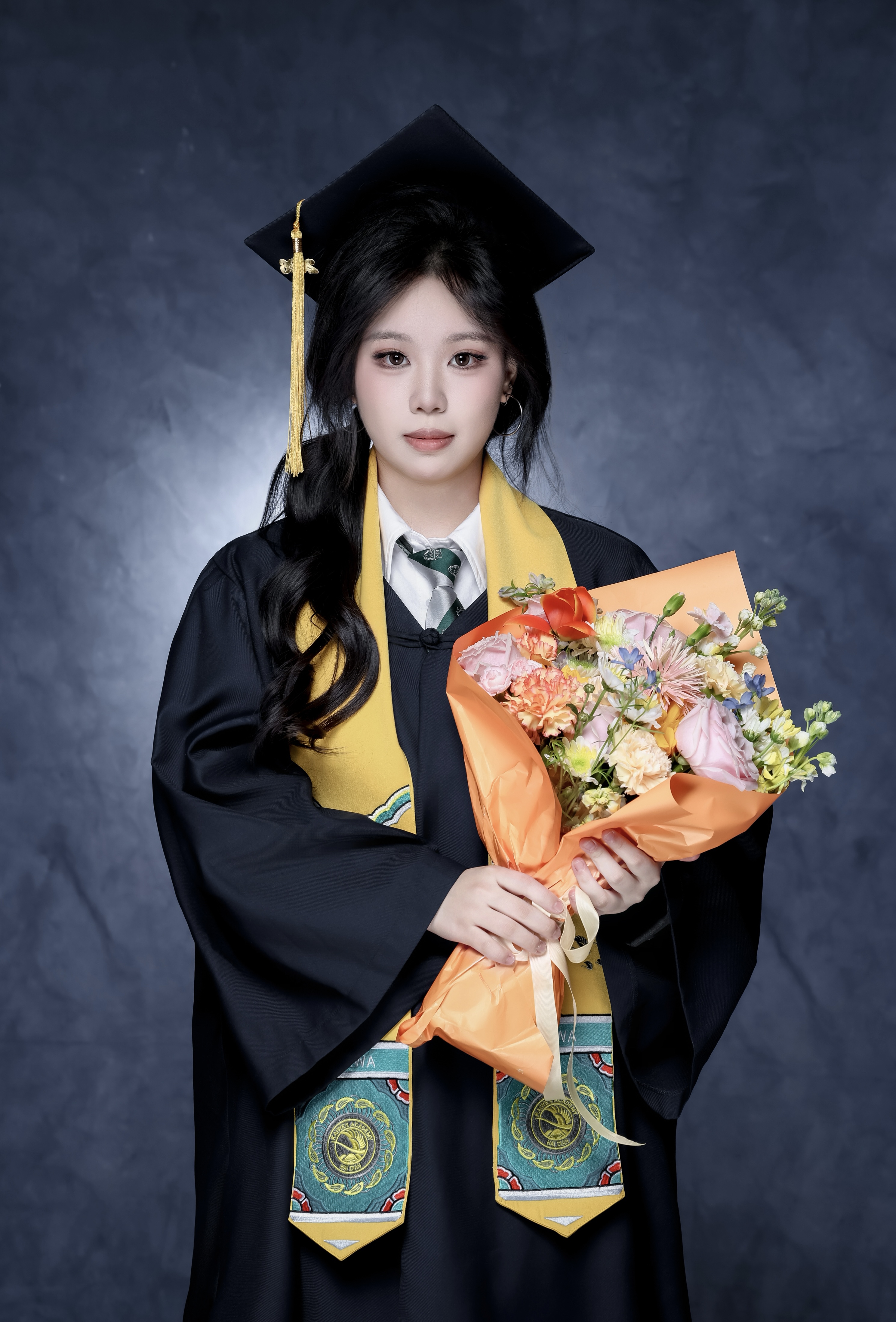
Transferring from a public school to Haidian Kaiwen Academy in Grade 10 was an intentional choice for Yanqiao Yang.
Soon after she arrived, she made a strong impression on her math teacher, Mr. Shawn Wu. In the first unit assessment of his class—a test with a high level of difficulty—Yanqiao earned a perfect score.
She later maintained a remarkable record for more than a month: perfect scores on every assignment, quiz, and exam. Mr. Wu’s class includes frequent assessments, and in his memory, only one other student before Yanqiao had ever sustained that level of consistency for so long.
When it came time to choose a major, Yanqiao also experienced moments of self-doubt. Mathematics was her strength, but it took time for her to fully believe that it could become her direction.
In preparing for math competitions, she showed extraordinary self-motivation and went on to earn strong results in AMC 12, the Euclid Mathematics Contest, and the Calculus Concept Inventory / CCL assessment. Later, she became a teaching assistant for Mr. Wu’s course.
Beyond the classroom, Yanqiao observed the world carefully. She noticed real problems and took action, hoping to use her own efforts to contribute something meaningful. In the eyes of her teachers, Yanqiao is humble, kind, thoughtful, careful in decision-making, and rigorous in her reasoning. She is, in many ways, a model student.
For Yanqiao herself, certainty has always mattered. At the same time, she has come to value the freedom of taking responsibility for her own life.
During her years at Haidian Kaiwen Academy, Yanqiao repeatedly stepped outside her comfort zone. The experience of changing academic tracks pushed her to think deeply about what each stage of life had given her—new abilities, new perspectives, and new questions.
During the application season, she received rejection letters. But instead of letting the application process define her, she chose to step outside that narrative and look at herself more clearly, protecting her inner balance under pressure.Now, having received offers from universities she truly values, she has already begun thinking about the road ahead.
Yanqiao keeps moving forward because she believes in the power of sustained effort. This belief aligns closely with her experience in mathematics: “To study math well, you have to put in a lot of work. You can’t rely on shortcuts or cleverness alone.”
Through steady effort, she has found her own rhythm—calm, clear, and increasingly sure of where she is going.
Haidian Kaiwen Academy Class of 2026
Washington University in St. Louis | Applied Mathematics
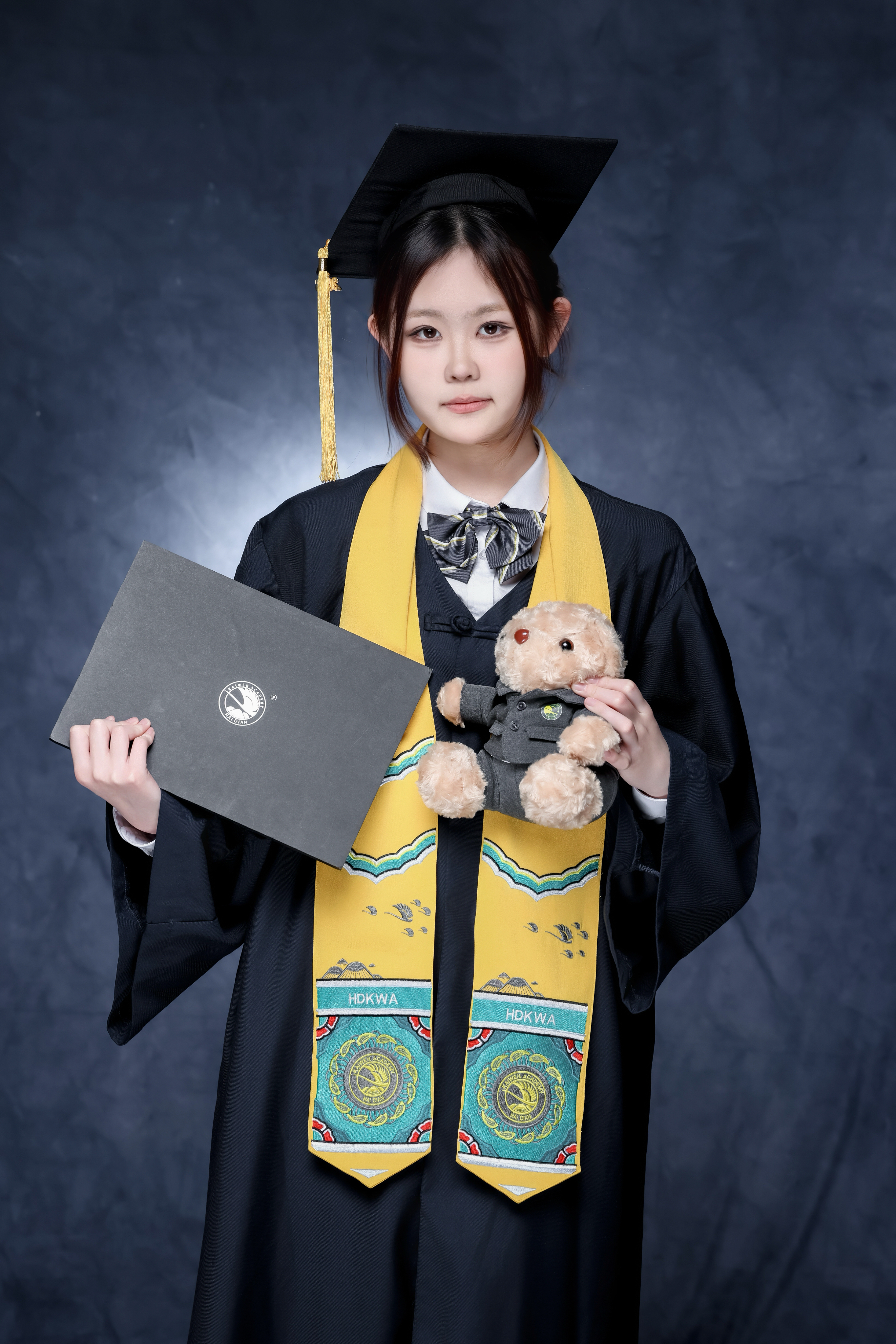
Yanxi Han lived in Singapore as a child. When she returned to China in Grade 2, her Chinese was still hesitant, and mathematics gave her an early sense of security. For Yanxi, math provided confidence. It also became a way to connect with classmates.
In Grade 10, she chose to transfer to an international academic pathway and joined Haidian Kaiwen Academy. The transition brought significant changes and challenges. In moments of confusion and anxiety, she began learning how to take responsibility for her choices.
When exploring possible university majors, she returned to the subject she trusted most: mathematics. At first, the certainty of mathematical answers was what attracted her. But in Haidian Kaiwen classrooms, where teachers constantly ask students to explain why, she gradually understood that mathematics is not only about getting the right answer. It is also about examining the process, breaking down problems, and learning how to face a complex world.
Slowly, she began to let go of her attachment to final answers and started paying more attention to whether the reasoning process made sense. That shift pushed her into deeper thinking. As her learning progressed, Yanxi moved toward more complex questions. She wanted to see whether mathematics could open another window onto the real world—or at least offer a new lens through which to understand it.
She joined collaborative research projects with classmates, and it was there that she began stepping out of the safety of mathematics and toward a wider world. In one earthquake research project, Yanxi explored how to improve the early-warning performance of seismic sensors. At first, she simply followed the steps and organized data. But when she placed the data into a model and watched the visualizations gradually take shape, she realized that this was not just an academic exercise. It corresponded to real disasters—and to real people who could be affected.
Later, Yanxi and her classmates created an “emotion hat,” using sensors to collect physiological signals from the body and mathematical models to analyze and visualize emotions. This project helped her see the complexity of emotions and led her to become more interested in psychology—the people behind the data, not just the data itself.
Through project after project, Yanxi continued growing within the world of mathematics, while also updating the way she saw the world beyond it. Now, even after receiving an offer she is proud of, she is still exploring.
For Yanxi, mathematics has changed from a “safe little room” into a medium. “Maybe it can’t answer everything, but it makes me more willing to face the real and complicated world.”
Haidian Kaiwen Academy Class of 2026
University of California, Los Angeles | Chemistry
University of California, San Diego | Chemistry
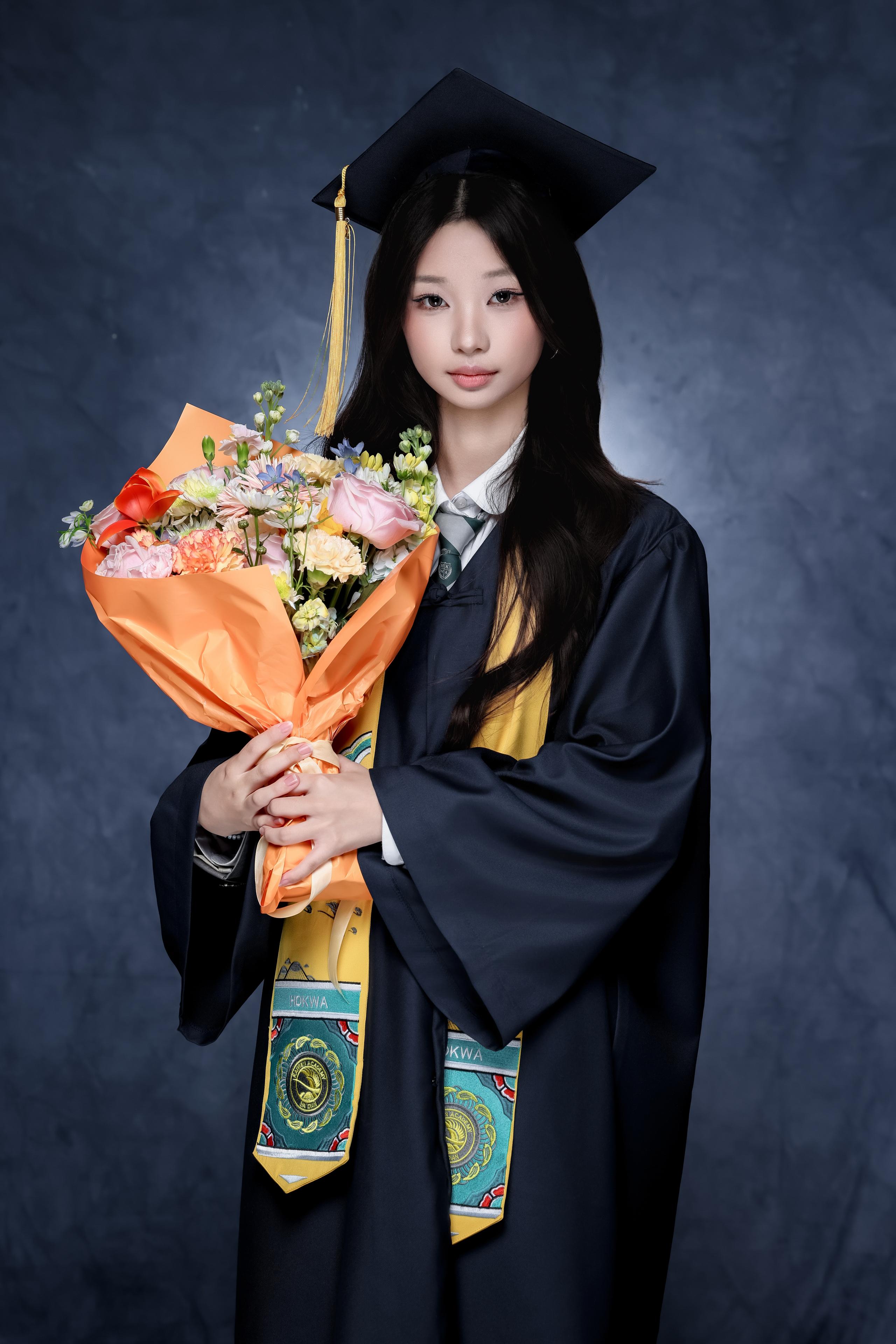
Ziping Tian’s connection with chemistry began in Grade 8 science class, through experiments that felt vivid and almost magical: changing colors in test tubes, the formation of precipitates, flames that flickered and transformed.
Chemistry immediately captured her attention. After entering high school, Ziping studied chemistry with Ms. Iris Zhang, moving from Fundamental Chemistry to AP Chemistry, and eventually becoming a chemistry teaching assistant.
In Ms. Zhang’s eyes, Ziping is focused, proactive, and grounded. She consistently earned A+ grades and always came to class fully prepared. Ziping loves chemistry, and she credits part of that love to her imagination. She can mentally recreate equations and microscopic experiments, turning abstract reactions into something visible in her mind.
But chemistry has taught her far more than imagination. In a Grade 9 Science Fair project, she and her teammates tried to investigate how different sugars affected caramelization. To test their ideas, they kept baking bread at home.
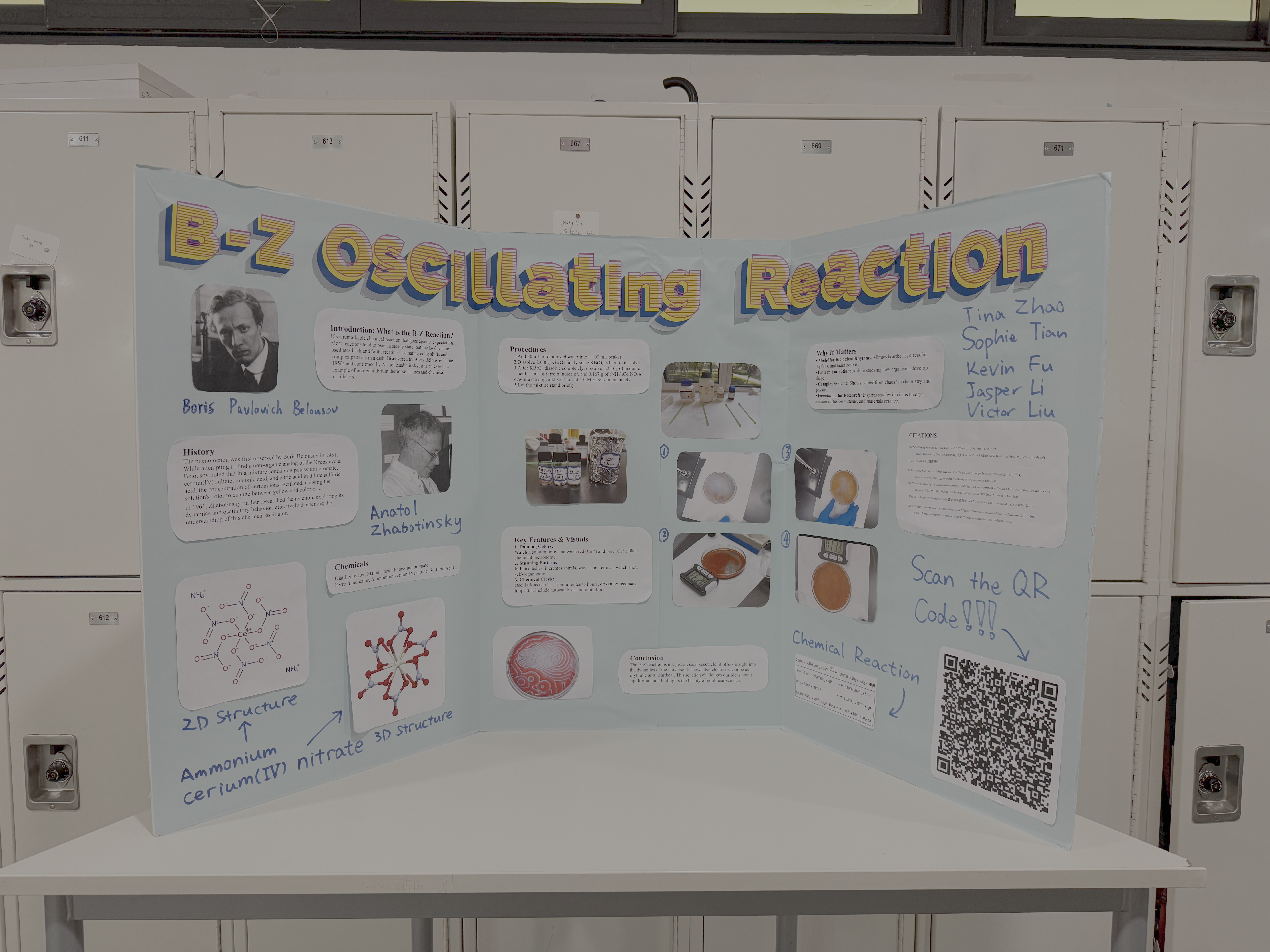
Ms. Zhang still remembers Ziping’s strong ability to execute. In chemistry class, Ziping became fascinated by the Belousov–Zhabotinsky oscillating reaction. Without hesitation, she gathered literature, worked with classmates to develop a feasible plan, repeated experiments, and finally succeeded in producing the oscillating reaction. She even made a video to document the process.
Later, Ziping participated in a summer research project related to protein design, where she saw another side of scientific research—and saw that what she had learned could truly be applied. Outside science, Ziping has played the French horn since elementary school and has long been part of the school orchestra. She also paints in oils, enjoying the way painting trains patience on the canvas.
She did not grow up as someone who loved sports, but in middle school she discovered climbing and found what she calls her “life sport.” The reason is simple: in her eyes, climbing feels like solving a maze. You fail often, and because of that, you quickly learn how to fall—and how to get back up.
Ziping speaks softly, but during the application process, she showed the resilience of a climber.
Chemistry is a highly competitive major. People around her kindly suggested that she consider a less direct application strategy. She refused. She believed she could try, and even if it was difficult, it was worth attempting.
Now, Ziping has received offers from her dream chemistry programs. During her six years at Haidian Kaiwen Academy, she moved steadily, without rushing, step by step toward her goal. She has grown into a resilient young woman.
Ms. Iris Zhang describes Ziping as someone with “still waters running deep”: quiet, reflective, thoughtful, and internally strong. She persisted through setbacks and kept moving after every fall. In the end, time gave her the answer she had hoped for.
Haidian Kaiwen Academy Class of 2026
The Hong Kong University of Science and Technology | Information Systems | Full Scholarship
University of Texas at Austin | Informatics
University College London | Information, Mathematics and Society
University of Toronto | Computer Science
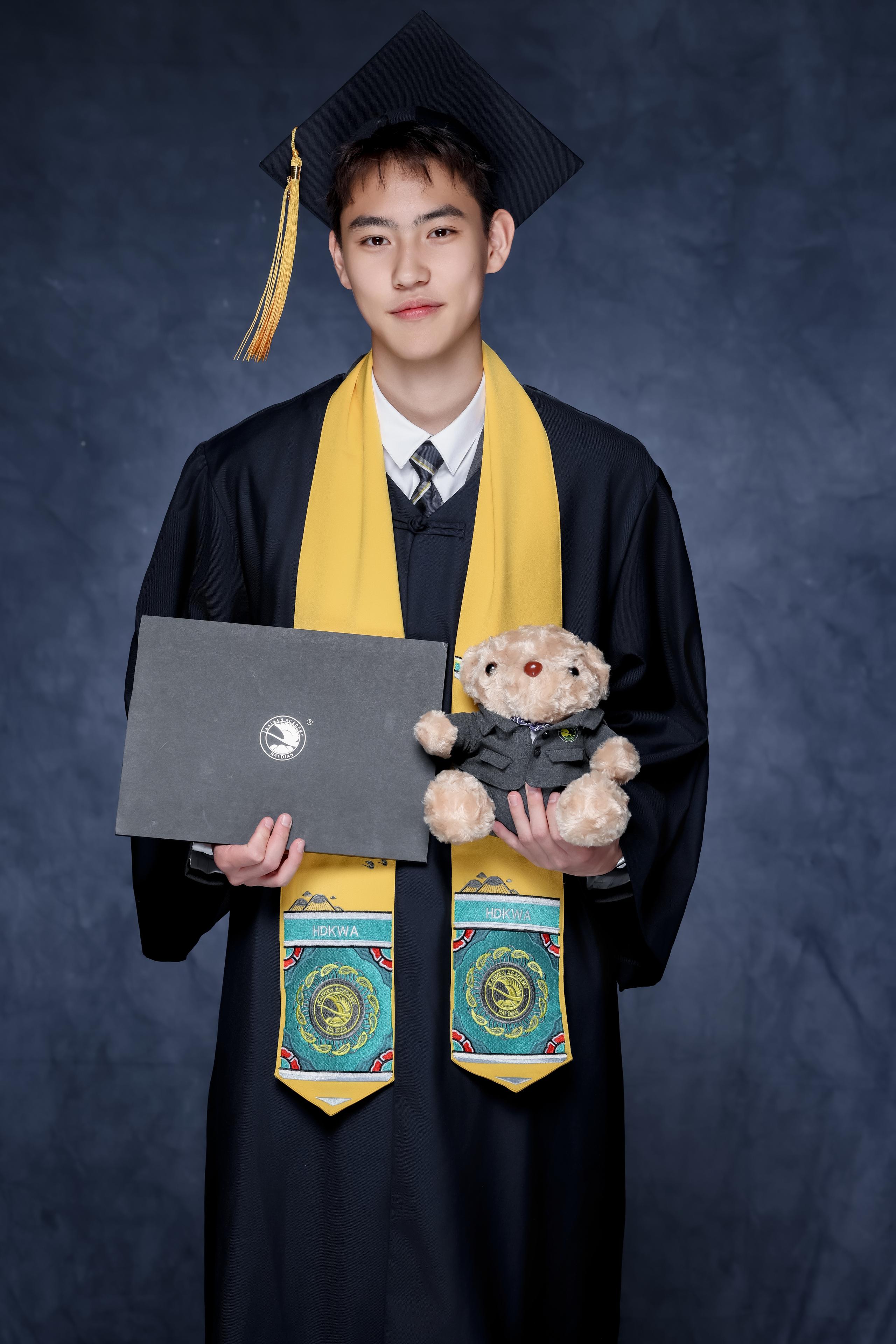
Yuyin Liu joined Haidian Kaiwen Academy in Grade 5.
During this year’s application season, he demonstrated broad academic interests. In a fast-paced and demanding process, he applied to universities in the United States, the United Kingdom, Canada, and Hong Kong, with intended majors spanning computer science, data science, informatics, and mathematics.
To him, these fields are connected.
Over four years of high school, Yuyin took nearly every computer science course offered at school, including Programming with Python, Game Design, and Robotics & Mechanics. He also developed proficiency in multiple programming languages.
But Yuyin is not someone who enjoys theory for theory’s sake. For him, applying technology to real projects is often more meaningful. He was a founding member of Mercuri Club, Haidian Kaiwen’s business school club guided by Mr. Dave Wei. The club now includes nearly 100 middle and high school students and aims to support those interested in business through structured guidance and practice.
Over eight years at the school, Yuyin grew from club member to club president. He and his teammates participated in dozens of business case competitions and simulations, solving a wide range of business problems. Over time, he changed from someone who competed to someone who could support younger members.
Yuyin likes doing things that are both useful and interesting. He once worked with teammates on Wave, an underwater robotics project that won Second Place globally in the 2022 Silicon Valley Youth Entrepreneurship Challenge and received USD 8,000 in investment from noted U.S. investor Tim Draper.
With the arrival of the AI era, Yuyin has grown quickly in this new wave of change. This year, while serving as a teaching assistant in a computer science course, he helped the teacher review simple assignments. Then he did something very “Yuyin”: he taught himself vibe coding and developed an assignment grading system to help improve efficiency.
His motivation was simple: “You should always do something fun.”
During this application season, Yuyin received many strong offers. He ultimately chose Information Systems at the Hong Kong University of Science and Technology, with a full scholarship.He believes the major sits at the intersection of technology, data, and business—and is the best fit for him.
In his view, the most important ability in the future is not simply mastering programming languages. It is the ability to describe problems clearly and think logically: to explain needs in an organized way, and then use tools to help realize them.
Over eight years, Yuyin has kept his essential character intact. He still sees “fun” as a reason to do things. He still believes that breaking down under pressure does not help—when a problem comes, you find a way to solve it.
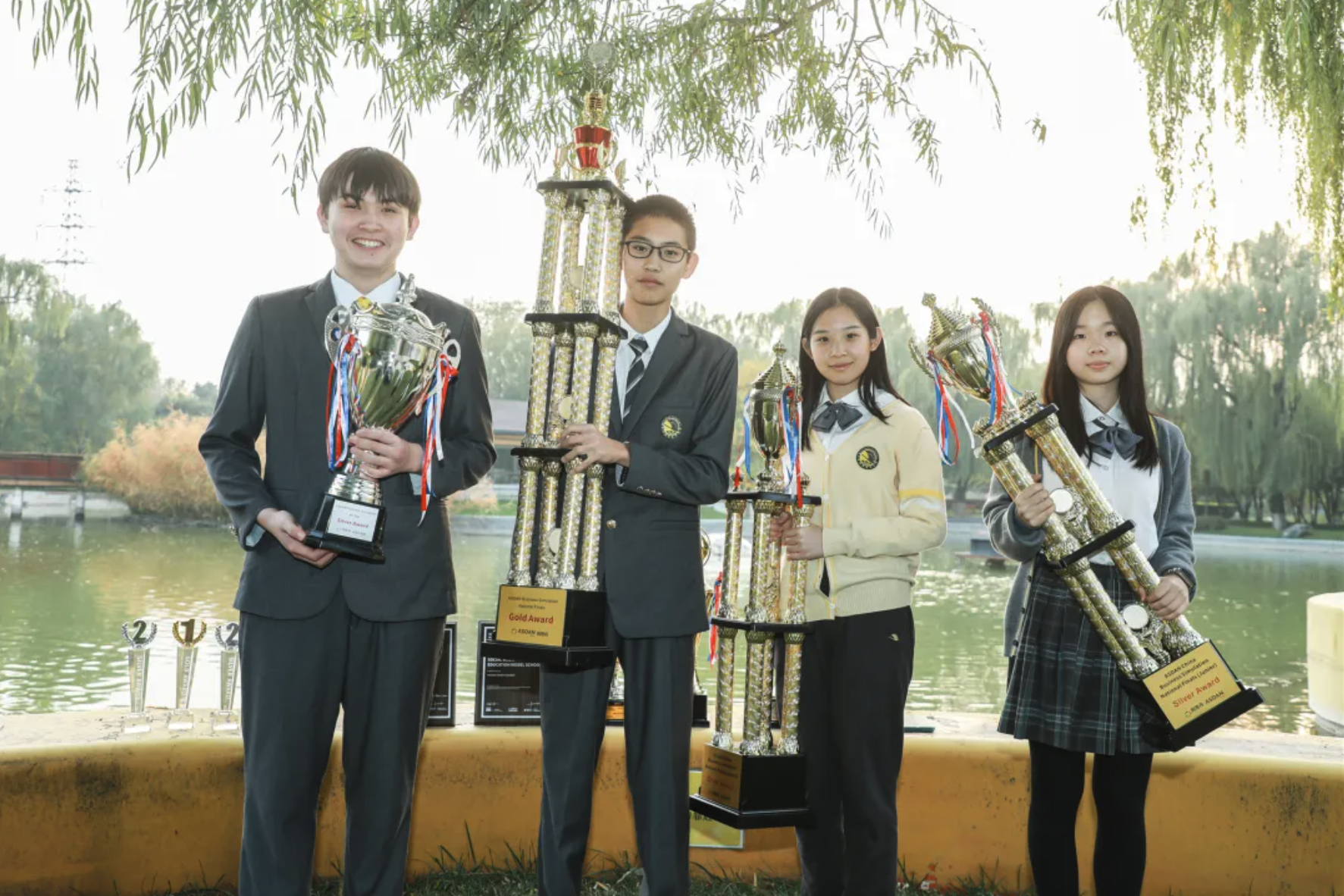
Starting from areas of certainty, these students are searching for keys to understand a world filled with uncertainty. In the stories of the Class of 2026, we see that true growth is not a single sprint. It is a long journey—sometimes difficult, often uncertain, but deeply meaningful.
In a wide world, every student can grow into a different shape. For ten years, Haidian Kaiwen Academy, a Beijing bilingual international school, has been working to provide the soil for this kind of growth.
The values of kindness and positivity, a solid academic curriculum, flexible course selection, rich after-school activities and student clubs, and the trust of teachers willing to support unconventional ideas—all of these make growth more than a lucky accident. They make it something that is allowed, supported, and sustained over time.
These graduate stories offer a glimpse into this educational community. The school does not try to define success in a single way. It simply records, honestly, how a few young people slowly became themselves with the support of a school community.
Now, they are preparing to leave Haidian Kaiwen Academy and move toward their own wider horizons. Perhaps this is the best answer that this soil can give.
 8610 - 8302 8588
 Principals.Office@hd.kaiwenacademy.cn
 No.65, Xingshikou Road, Haidian District, Beijing